
Free school meals for every family on Universal Credit: what changed
What happened
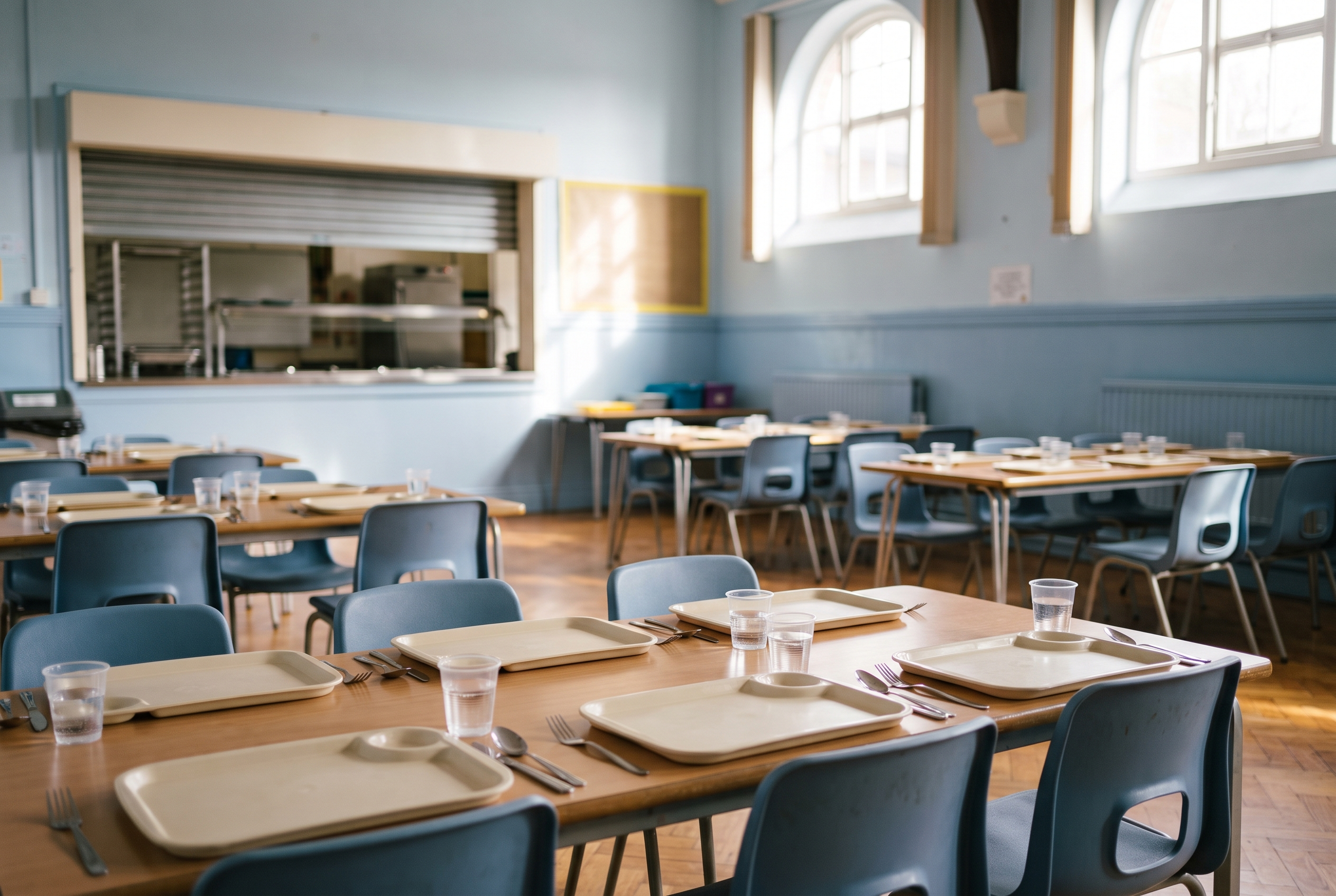
On 1 September 2026, the Department for Education announced a package of measures aimed at cutting the cost of sending a child to school in England. The biggest change is to free school meals. Children in households receiving Universal Credit can now get free school meals regardless of how much the household earns. Previously there was an earnings limit, which meant some families on Universal Credit did not qualify. The department says more than three million children are covered by the new rules. There is one important detail that is easy to miss. If your child is not already receiving free school meals, you need to apply. It does not happen automatically just because you receive Universal Credit. Alongside this, 1,400 new free breakfast clubs are opening. There are also 9,000 additional childcare places being created through 450 school-based nurseries. The third element is school uniform. New limits are being placed on how many branded items a school can require. Branded items, which carry a school logo, usually have to be bought from a specific supplier and cost more than the equivalent from a supermarket. The government says that together these measures could save families up to £1,200 a year. It says eligible working parents using government-funded childcare could save up to £8,000 a year. Education Secretary Lucy Powell said: 'From school uniforms and lunches to childcare and all the other costs that come with a new term, the bills can quickly add up.'
Why this matters
The connection between food and learning is not complicated. A hungry child finds it harder to concentrate, harder to behave well, and harder to take part. The change to eligibility closes a gap that has frustrated people for years. Under the old rules, a family could be receiving Universal Credit, clearly struggling, and still not qualify because their earnings were slightly above the threshold. Those families often found themselves in the worst position of all: too well off for help, not well off enough to manage comfortably. Anna Taylor, Executive Director of the Food Foundation, described the change as the culmination of a seven-year campaign, saying: 'This will relieve struggling families and will mean 500,000 extra children will be protected from going hungry.' Nick Harrison, Chief Executive of the Sutton Trust, called the measures 'a significant step towards taking hunger out of the classroom'. The uniform change addresses a different but related problem. Branded uniform requirements have long been a source of difficulty for families, because there is no way to shop around. When a school requires a logoed jumper from one supplier, the price is whatever it is. Breakfast clubs matter for two reasons at once. They provide food, and they provide free childcare at the start of the day, which can make the difference between a parent being able to take a job and not. There is also a health angle worth naming. Children who are consistently well fed are less likely to experience the tiredness, poor concentration and low mood that go with going without.
What the evidence actually says
It is worth separating what has definitely changed from what is projected. What has changed is clear and specific. The eligibility rule for free school meals now covers households on Universal Credit without an earnings limit. That is a concrete policy change with a date attached. The savings figures need reading more carefully. The '£1,200 a year' is an estimate of what a family could save if they benefit from all of the measures together: free meals, a free breakfast club, and cheaper uniform. Many families will not use all three. A family whose child already received free school meals, for instance, will see less change. The same applies to the £8,000 childcare figure. That applies to eligible working parents making full use of government-funded childcare, which is a particular set of circumstances rather than a typical one. This is not to suggest the figures are wrong. It is to say that 'up to' is doing real work in that sentence, and families should look at their own situation rather than expecting a specific amount. The research linking free school meals to better outcomes is reasonably strong, particularly on attendance and on reducing food insecurity. Effects on attainment are more mixed across studies, partly because a school meal is one factor among many in how well a child does. One practical caution deserves emphasis. Take-up of free school meals has historically been below eligibility, because some families do not realise they qualify, and some feel awkward applying. The DfE has confirmed that new applicants must apply rather than being enrolled automatically. A benefit nobody claims helps nobody.
Practical advice
If you think your child might now be eligible, here is what to do. Apply, even if you are unsure. Applications go through your local council, and most have an online form. It takes a few minutes. If you are already receiving free school meals for your child, you do not need to reapply. Do not assume you earn too much. That was the old rule. If you receive Universal Credit, the earnings limit no longer applies. Ask the school office if you are stuck. School staff deal with this constantly and can point you to the right form. Applications are handled confidentially. Check whether your school has a breakfast club and whether places need to be booked. Popular clubs can fill up. On uniform, check the school's current policy before buying. If it has been updated to reduce branded items, you may be able to buy more from ordinary shops. Look for uniform swap schemes. Many schools, parent groups and charities run them, and there is no reason to buy new when a good second-hand item will do. Applying for free school meals can also unlock other support, sometimes including help with school trips or the pupil premium funding your school receives. It is worth doing even if your child prefers a packed lunch. If money is tight more generally, ask the school about a hardship fund. Many have one and do not advertise it widely.
What to know
From 1 September 2026, children in households receiving Universal Credit in England can get free school meals regardless of household earnings, covering more than three million children. Families applying for the first time must apply through their local council. It is not automatic. The package also includes 1,400 new free breakfast clubs, 9,000 extra childcare places through 450 school-based nurseries, and new limits on branded uniform items. The government estimates savings of up to £1,200 a year for families, and up to £8,000 a year for eligible working parents using government-funded childcare. These are maximum figures and depend on circumstances. The Food Foundation estimates 500,000 extra children will be protected from going hungry. If you are unsure whether you qualify, apply anyway or ask your school office. Take-up has historically been lower than eligibility. Sources: GOV.UK / Department for Education, 'Breathing space for families as government eases school costs', 1 September 2026, https://www.gov.uk/government/news/breathing-space-for-families-as-government-eases-school-costs | GOV.UK, 'DfE Update local authorities: 2 September 2026', https://www.gov.uk/government/publications/dfe-update-2-september-2026/dfe-update-local-authorities-2-september-2026 | GOV.UK, 'Apply for free school meals', https://www.gov.uk/apply-free-school-meals This article is for general information about school funding and support in England, and does not replace advice from your school, local council or a qualified professional. If your child has a medical condition, allergy or specific dietary need, please discuss this directly with the school and your GP or dietitian.
Related articles

A 47-year record broken, glaciers at their biggest loss yet, and a 4,000-year-old piece of ice on a table
On 15 October 2026, the UK launched an updated Arctic Policy Framework. Uma Kumaran MP, Minister for the Polar Regions at the Foreign, Commonwealth and Developm…
Almost a million young people are NEET, and six in ten have never had a job at all
On 15 October 2026, the Department for Work and Pensions and UKHospitality announced a partnership with sixteen of Britain's biggest hospitality employers. The…
Only 14% passed their maths resit. The Education Secretary says that has to stop
On 15 October 2026, Education Secretary Lucy Powell gave a speech to the Confederation of School Trusts conference. Powell was appointed Education Secretary in…