
Can an air purifier really make you think faster? A new trial suggests maybe
What happened
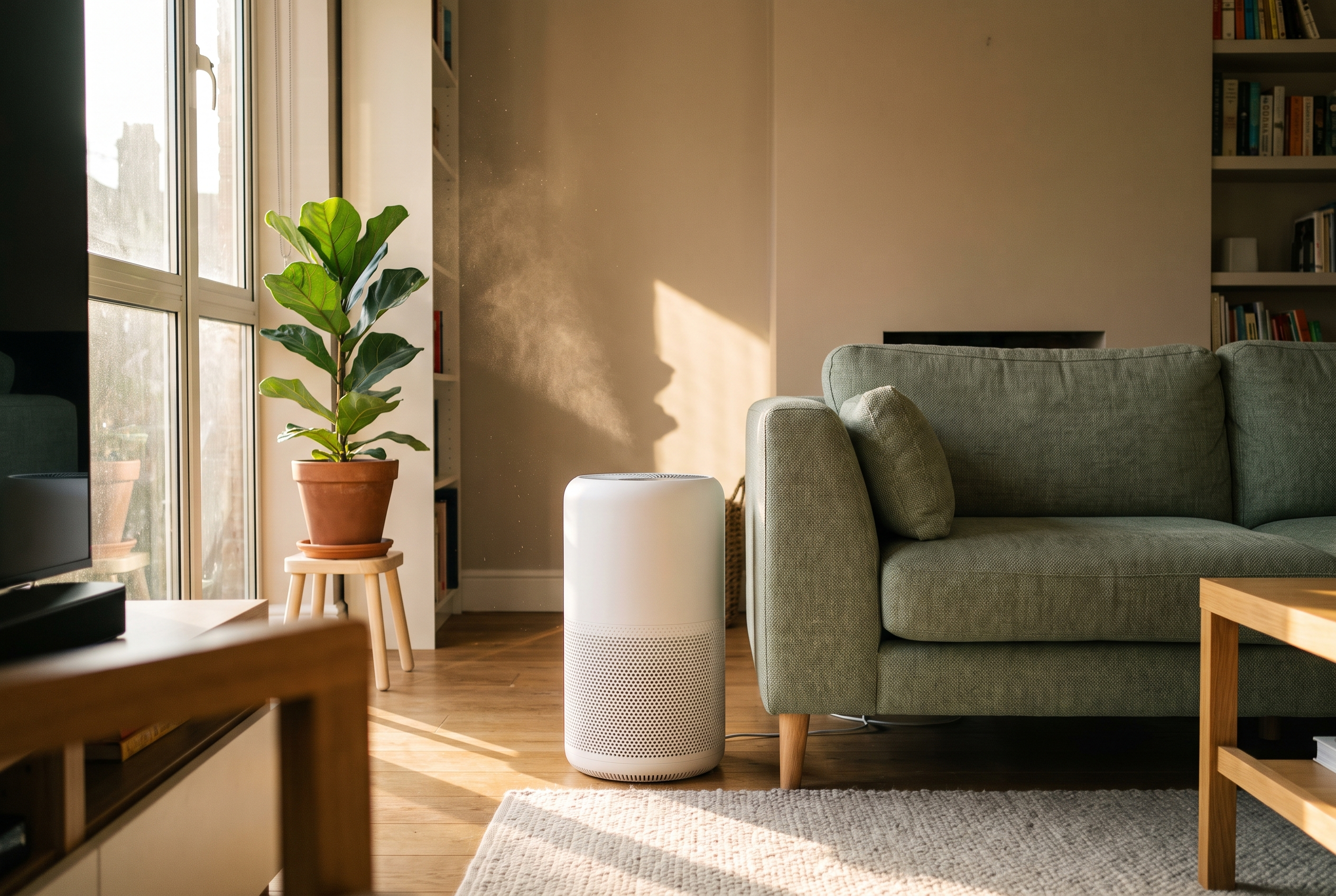
A study published in the journal Scientific Reports has found that adults aged 40 and over performed about 12 per cent faster on a test of thinking skills after using a HEPA air purifier at home for one month. HEPA stands for high-efficiency particulate air. A HEPA filter is a very fine mesh that traps small particles from the air as it passes through, including the tiny specks of pollution that come from traffic. The research came from a project called HAFTRAP, which looked at home air filtration and traffic-related air pollution. It involved 119 people aged between 30 and 74 who lived in Somerville, Massachusetts, in the United States. The area was chosen because it has heavy traffic, and therefore higher levels of air pollution. The study used a design called a randomised crossover trial. Each person had a real HEPA purifier in their home for a month. They then had a month with no purifier, called a washout period. Then they had a month with a sham unit, which looked and sounded like a purifier but did not actually filter the air. Some people had the sham first and the real one second. The thinking test used was the Trail Making Test. It is a well-established pencil-and-paper task where you connect numbers and letters in order as quickly as you can. It measures attention, processing speed and what psychologists call executive function, which is roughly the brain's ability to plan, switch between tasks and stay organised. Among the younger participants, no statistically significant difference was found.
Why this matters
Air pollution is one of those risks that is easy to ignore because you usually cannot see it. It does not feel like a health decision in the way that smoking or exercise does. But the evidence linking air pollution to health has been building for years. It is already well established as a factor in heart and lung disease. The World Health Organization also lists air pollution among the modifiable risk factors relevant to dementia risk, alongside things like smoking, physical inactivity and high blood pressure. What makes this particular study interesting is that it is about something you might actually be able to change. You cannot personally reduce the traffic on your road. You may have some control over the air inside your home. It also matters because of where many people live. If you live on a busy road, near a junction, or in a city centre, your exposure is higher than someone in a quiet village. That is not a choice most people make freely. It is usually about what housing is affordable and available. So research into whether indoor filtering can offset some of that outdoor exposure has a fairness angle to it, not just a scientific one. Having said all that, please read the next section before buying anything.
What the evidence actually says
This is a genuinely interesting study, and it is also a small one. Both things are true, and it would be misleading to mention one without the other. First, the size. There were 119 participants. That is a reasonable number for this kind of intensive trial, but it is small compared with the very large studies that usually change health guidance. Second, and importantly, this was a secondary outcome analysis. That means thinking skills were not the main question the trial was originally designed to answer. Secondary findings are valuable for generating ideas, but they are weaker evidence than a result the study was built to test. They need to be confirmed by further research designed specifically for that purpose. Third, the benefit was found in the over-40s only. In younger participants there was no statistically significant difference. It is not yet clear why. Fourth, one month is a short time. The study shows a change in test performance over weeks. It does not show anything about long-term brain health, and it certainly does not show that air purifiers prevent dementia. Nobody has demonstrated that. Fifth, the setting matters. Participants lived in an area with high traffic pollution. If your home already has clean air, there may be less to gain. On the possible explanation, researchers point to existing work suggesting that fine particle pollution may affect the brain's white matter, which helps brain cells send signals to one another. The brain regions thought to be most affected by air pollution overlap with the ones involved in mental flexibility and executive function, which is where the improvement showed up. That fits together neatly, but a plausible explanation is not proof. The honest summary is this: a well-designed small trial found a short-term improvement in one thinking test among older adults. That is worth following up. It is not yet a reason to make big claims.
Practical advice
If you want to improve the air in your home, there are sensible steps that cost little or nothing. Ventilate at the right times. Opening windows helps, but if you live on a busy road, try to air rooms when traffic is lighter rather than during rush hour. Deal with indoor sources first. Cooking, especially frying, produces a lot of fine particles. Use an extractor fan or open a window when you cook. Candles, wood burners and smoking indoors all add to the load. If you buy a purifier, look for a genuine HEPA filter and check the room size it is rated for. A unit that is too small for the room will not do much. Remember that filters need replacing, which is an ongoing cost. Be wary of marketing claims. No air purifier has been shown to prevent dementia, and anything advertised that way is overstating the evidence. Keep perspective on the bigger picture. The things with the strongest evidence for protecting brain and heart health remain unglamorous: not smoking, staying physically active, managing blood pressure, hearing checks, sleep, and staying socially connected. If you have asthma or another lung condition and your symptoms are worse at home, mention it to your GP or pharmacist. Air quality may be one factor among several worth discussing.
What to know
A study in Scientific Reports found that adults aged 40 and over did about 12 per cent better on speed in a test of executive function after a month using a HEPA air purifier at home. The trial involved 119 people aged 30 to 74 in a high-traffic area of Somerville, Massachusetts, and compared a real purifier against a dummy unit. No statistically significant effect was found in the younger participants. This was a secondary outcome analysis in a relatively small trial over one month. It suggests something worth investigating further. It does not show long-term benefit and does not show any effect on dementia risk. Reducing indoor sources of pollution, such as smoke and cooking fumes, and ventilating sensibly are practical steps that do not depend on buying a device. Sources: Scientific Reports (Nature), 'Effect of HEPA filtration air purifiers on cognitive function from a secondary outcome analysis of a pragmatic randomized crossover trial', 2026, https://www.nature.com/articles/s41598-026-48063-8 | ScienceDaily, 'HEPA air purifiers may boost brain function after just one month', 30 August 2026, https://www.sciencedaily.com/releases/2026/08/260830000016.htm | The Conversation, 'HEPA air purifiers may boost brain power in adults over 40 - new research', 2026, https://theconversation.com/hepa-air-purifiers-may-boost-brain-power-in-adults-over-40-new-research-280885 This article is for general information and does not replace advice from a doctor, pharmacist or other qualified healthcare professional. If you have a lung condition or ongoing symptoms you think may be linked to air quality, please speak to your GP or pharmacist.
Related articles

The first thing you say matters, and most of us have no idea what it should be
On 15 October 2026, the Ministry of Justice launched a campaign called Respond. It sits within the government's wider ENOUGH campaign on violence against women…
Legal to buy from today, illegal after 11pm: what the fireworks rules actually say
On 15 October 2026, the Office for Product Safety and Standards (OPSS) launched a campaign about fireworks. Its title is 'Think Beyond your garden, Know your Im…
Update: the driest April to September in over a century, and six counties now in severe drought
This is a follow-up to a story we have covered before, because something significant has changed. On 15 October 2026, the government declared severe drought in…