
Manchester becomes a testing ground for NHS artificial intelligence
What happened
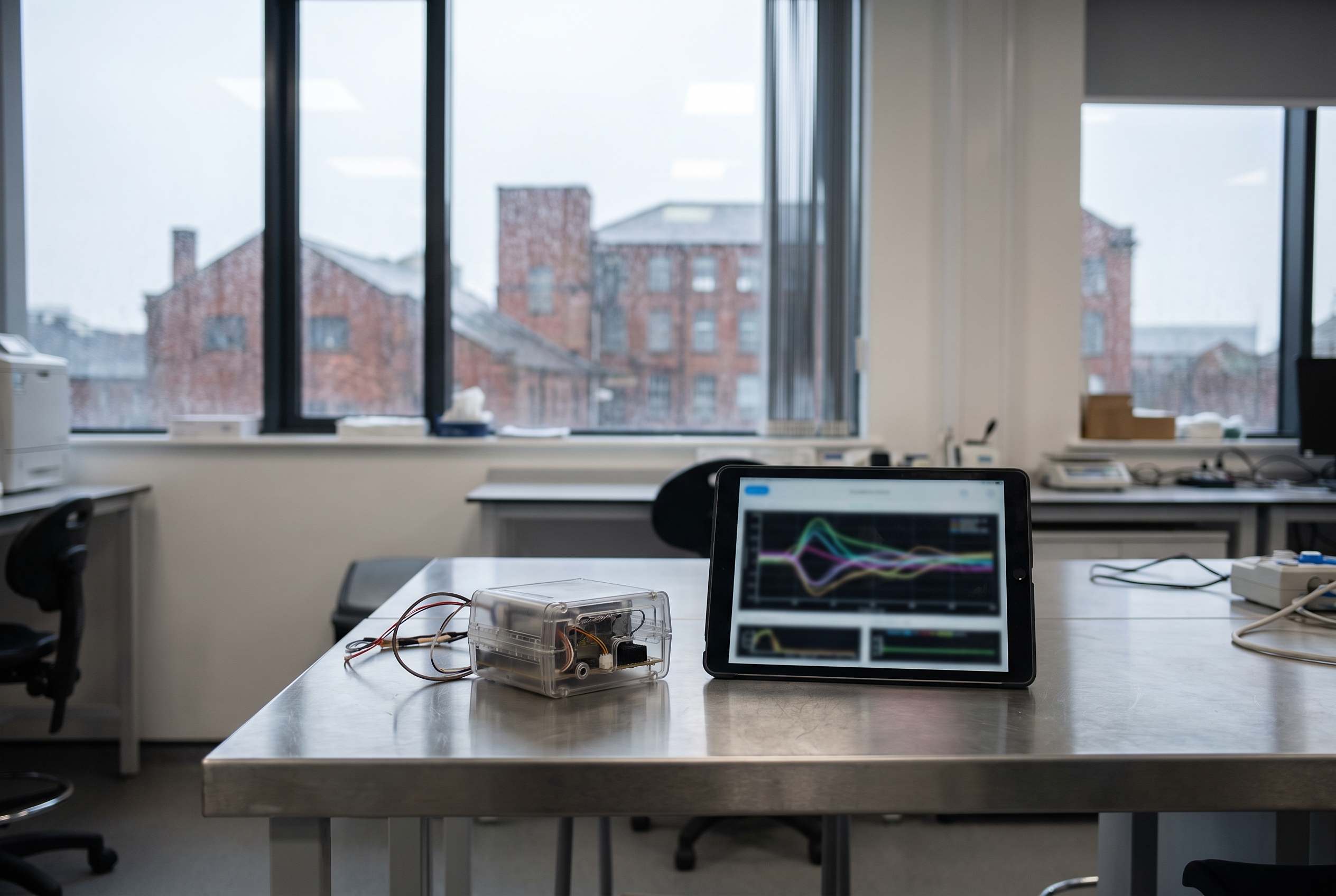
On 2 September 2026, a new scheme called the Manchester Sandbox was launched. It lets new health technologies be tested inside real NHS services, while regulators watch closely. The scheme is a partnership between two organisations. One is the Medicines and Healthcare products Regulatory Agency, or MHRA. This is the UK body that decides whether medicines and medical devices are safe enough to be used. The other is Manchester University NHS Foundation Trust, one of the largest NHS trusts in the country. A 'sandbox' is a term borrowed from computing. It means a safe, walled-off space where something new can be tried out without putting everything else at risk. In this case, it means promising technology can be used with real patients, in real clinics, but under careful supervision and with rules agreed in advance. The first technologies are expected to include AI-enabled medical devices. Among them are tools designed to spot patients who are at greater risk of complications from long-term conditions, so that help can be offered earlier. At the launch event at the trust's Oxford Road campus, wearable devices and AI-powered ambient voice technology were demonstrated. Ambient voice technology listens to a conversation between a patient and a clinician and turns it into notes, so the clinician spends less time typing. Lawrence Tallon, chief executive of the MHRA, said Manchester 'brings together the NHS, innovators, researchers and regulators'. Health Innovation Minister James Frith said that 'innovation must never come at the expense of safety'. Mark Cubbon, chief executive of the trust, said the partnership 'brings together key partners earlier in the process so we can understand what works'.
Why this matters
There is a long-standing problem in health technology. A company builds something clever. It works well in a laboratory or a small trial. Then it meets the messy reality of a busy hospital, and nobody is quite sure whether it still works, or whether staff will actually use it. That gap between 'it works in testing' and 'it works on a Tuesday afternoon in a real clinic' has stalled a lot of promising ideas. It has also let some things through that turned out to be less useful than they looked. A sandbox tries to close that gap. By involving the regulator from the beginning rather than at the end, the aim is to gather proper evidence about how something performs in ordinary use, while safety rules still apply. This matters for patients in two directions. Genuinely good technology should reach people faster. Technology that does not live up to its promise should be found out sooner, before it is rolled out widely. The evidence being collected is meant to cover safety, effectiveness, and the effect on both patients and staff. That last point is easy to overlook. A tool that works brilliantly but adds an hour to a nurse's day is not a success. There is also a bigger picture. AI in healthcare has attracted enormous claims. Setting up a structured way to test those claims, with a regulator involved, is a more grown-up response than either banning it or waving it through.
What the evidence actually says
It is worth being honest about the stage this is at. The Manchester Sandbox is a beginning, not a result. What has been announced is a way of testing things. No new treatment has been proven, and no findings have been published. The first technologies are described as 'expected' to include AI-enabled devices, which means the detailed list is still taking shape. So the correct response is interest rather than excitement. If in a year's time this scheme has produced clear published evidence about which tools help and which do not, that will be genuinely valuable. That evidence does not exist yet. It is also worth understanding what a regulatory sandbox does and does not change. It does not remove safety rules. It creates a supervised setting in which those rules can be applied to something new, where the usual approval route may not fit neatly. The MHRA has used sandbox approaches before in other parts of its work, so this is an extension of an existing method rather than an entirely new invention. One more note of realism. Ambient voice technology, one of the tools demonstrated, has attracted a lot of attention across the NHS. It has shown promise for reducing admin time. But tools that generate clinical notes need careful checking, because a mistake in a medical record can travel a long way. The point of supervised testing is precisely to find those weaknesses. Later this year, the trust and the MHRA plan a roundtable with healthcare providers, innovators, researchers, and patient and public representatives, to shape which projects come next.
Qurexa perspective
We work in healthcare logistics, so we spend our days on the unglamorous end of technology: making sure the right medicine reaches the right person on the right day. That experience makes us sympathetic to the thinking behind this scheme. The hardest part of any health technology is almost never the clever bit. It is everything around it, such as whether it fits how people already work, and whether it holds up on a difficult day rather than a good one. We would also say this to anyone reading about AI in the NHS and feeling uneasy: you are entitled to ask how a decision about your care was made, and who checked it. Good technology should make that easier to answer, not harder.
Practical advice
Most people will not notice this scheme directly. But AI is appearing across NHS services, so a few things are worth knowing. You can ask whether a tool was involved in your care and what part it played. Staff should be able to give you a straight answer. A human clinician remains responsible for your care. AI tools in the NHS are used to support decisions, not to replace the person treating you. If a recording or note-taking tool is being used during your appointment, you should be told. If you are uncomfortable, it is reasonable to say so and to ask what the alternative is. Check your records if you can. Many people can see parts of their health record through the NHS App. If something looks wrong, report it to your GP practice. Be cautious about health apps that are not part of NHS care. Being available to download does not mean a tool has been assessed as a medical device. If you are offered the chance to take part in a study or pilot, ask what happens to your data, whether you can withdraw, and who to contact with concerns. Taking part is voluntary.
What to know
The Manchester Sandbox launched on 2 September 2026. It is a joint scheme between the MHRA and Manchester University NHS Foundation Trust. It allows new health technologies, starting with AI-enabled medical devices, to be tested in real NHS settings under regulatory supervision. The aim is to gather evidence on safety, effectiveness and the effect on patients and staff, so useful tools reach people sooner and weaker ones are identified earlier. This is a method for producing evidence, not evidence itself. Nothing has yet been proven by the scheme, and the first projects are still being confirmed. A roundtable with providers, innovators, researchers and patient representatives is planned later this year to shape the next phase. Sources: GOV.UK, 'MHRA and Manchester NHS partner on health innovation sandbox', September 2026, https://www.gov.uk/government/news/mhra-and-manchester-nhs-partner-on-health-innovation-sandbox | Open Access Government, 'Manchester NHS and MHRA launch health innovation sandbox to test AI and new technologies', September 2026, https://www.openaccessgovernment.org/manchester-nhs-and-mhra-launch-health-innovation-sandbox-to-test-ai-and-new-technologies/213843/ | Health Tech World, 'Manchester launches NHS-MHRA sandbox to fast-track health tech innovation', September 2026, https://htworld.co.uk/news/ai/manchester-launches-nhs-mhra-sandbox-to-fast-track-health-tech-innovation-lead26/ This article is for general information and does not replace advice from a doctor, pharmacist or other qualified healthcare professional. If you have questions about technology used in your own care, please raise them with your clinical team.
Related articles

Switched on in 1956, switched off in 2003, and now being taken apart piece by piece
Seventy years ago, in October 1956, Queen Elizabeth II opened Calder Hall on the Sellafield site in west Cumbria. It was the world's first nuclear power station…
25 storms, £179,000 of delay each, and ten weather stations bolted to masts already standing
On 14 October 2026, Network Rail announced that its Wales and Borders route has become the first in Britain to turn existing railway radio masts into weather st…
Two dead satellites, 17,000 mph, and one refuellable spacecraft sent to fetch them
On 15 October 2026, the UK government confirmed funding for a mission to go up and fetch two dead satellites. It is called the UK Active Debris Removal mission…