
Passports for Ireland ferries: what is changing from 28 September
What happened
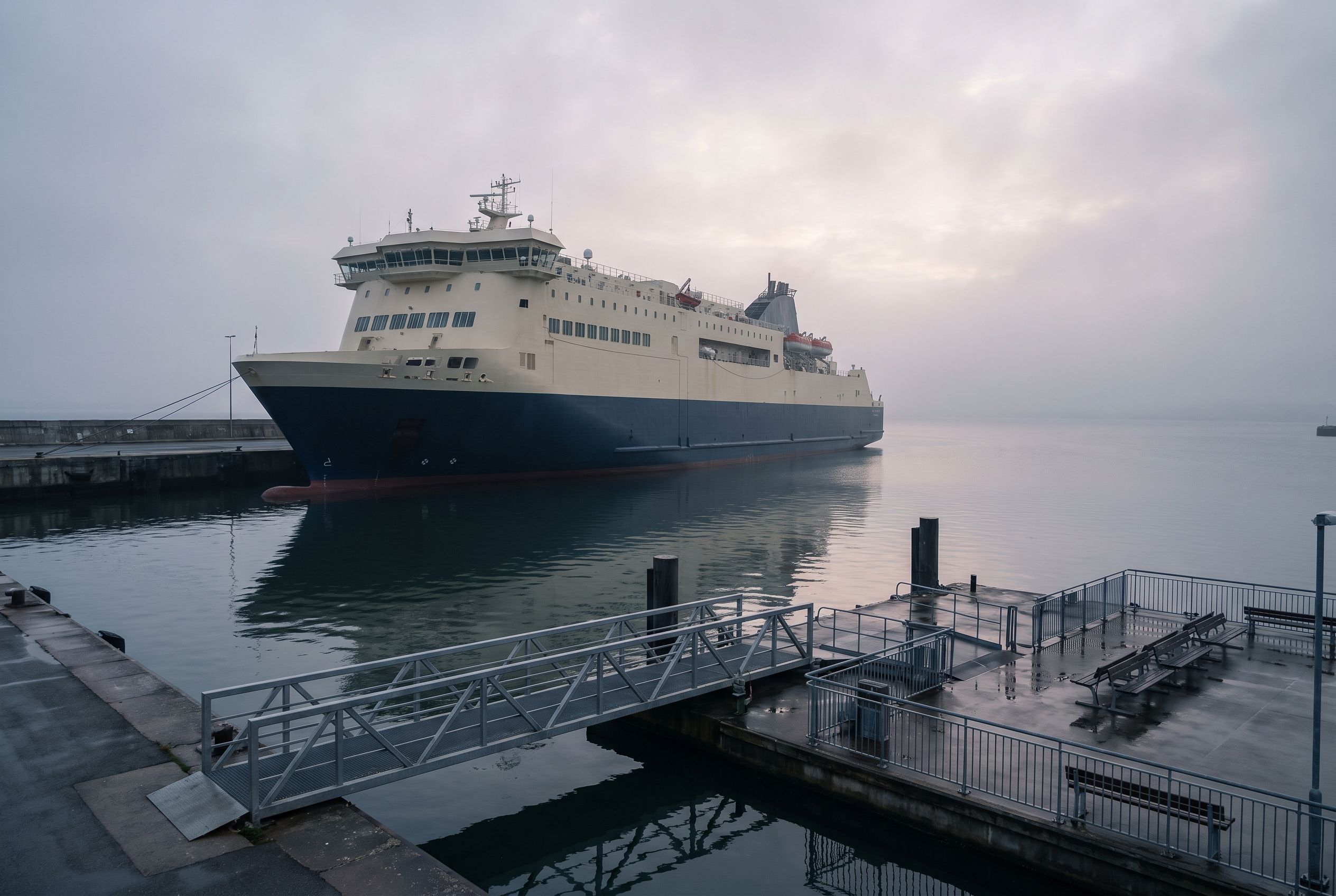
From 28 September 2026, passengers on some ferry routes between Britain and Ireland will need to show a valid passport before boarding. The change is being brought in by ferry operators, working with UK Border Force, and the stated reason is to ensure the accuracy and integrity of passenger data before boarding. The rules are not identical across every route, so the detail matters. Stena Line says all passengers must present a passport on its Holyhead to Dublin and Fishguard to Rosslare crossings from the end of September. However, Stena Line has said its services via Belfast, Liverpool, Cairnryan or Heysham can still be travelled without a passport. Irish Ferries has said it will require a valid passport on all its routes between the Republic of Ireland and Britain. Here is the part that surprises people. British and Irish citizens do not, in law, need a passport to travel between the UK and Ireland. That is because of the Common Travel Area, an arrangement between the UK, Ireland, the Isle of Man and the Channel Islands that has existed for more than a century and predates both countries' membership of the EU. So this is not a change in the law. It is the ferry companies deciding to require a passport for their own operational and data reasons, even though the legal right to travel without one remains.
Why this matters
For most travellers the practical effect is simple: if you are taking one of the affected ferries from late September, take your passport, even though you might not strictly need it in law. The gap between what the law says and what the ferry company requires is the thing worth understanding. You may have a legal right to travel without a passport under the Common Travel Area, but if the operator will not board you without one, that right does not get you onto the boat. The company's boarding conditions are what you actually have to satisfy. This matters especially for people who have relied for years on travelling between Britain and Ireland with just a driving licence or another form of photo ID. Ferries have traditionally been the relaxed option compared with flying, and for many families and older travellers that informality was part of the appeal. Some people may not hold a current passport at all, precisely because they only ever travel to Ireland. It also matters because the routes differ. Someone who assumes all Stena Line sailings now need a passport might needlessly worry, or someone who assumes none do might be caught out at Holyhead. The safe approach is to check your specific route and operator rather than relying on a general impression.
What the evidence actually says
This is a case where the facts are fairly clear, but the framing in some coverage has been misleading, so it is worth being precise. What is accurate: from 28 September 2026, the named operators will require a passport on the routes described. The Common Travel Area continues to give British and Irish citizens the legal right to travel between the two countries without one. What has been overstated in places: some headlines imply a new legal requirement or a change to the Common Travel Area itself. That is not what has happened. The legal position is unchanged. What has changed is a commercial boarding policy. The distinction is not just pedantry. It tells you where to look for the rules that affect you. For this change, the authority is the ferry operator's own conditions of carriage, not government law. That is why the requirement differs from route to route and operator to operator, which would not be the case if it were a single legal rule. It is also worth noting what the change does not tell us. The operators have cited data accuracy and integrity, but the announcements do not spell out the full detail behind that. Reading too much into the reasons given would be speculation. The practical instruction, take your passport on the affected routes, holds regardless of the precise motivation. And it is worth remembering that policies like this can be updated. Always check the current requirement for your route close to your travel date rather than relying on an article, including this one.
Practical advice
Check your specific route and operator before you travel. The requirement is not uniform. Stena Line applies it to Holyhead to Dublin and Fishguard to Rosslare, but says services via Belfast, Liverpool, Cairnryan or Heysham can be travelled without a passport. Irish Ferries applies it to all its Britain to Republic of Ireland routes. If in any doubt, take your passport. It is the one document that satisfies every operator on every route, so it removes the guesswork. Check your passport is valid and not about to expire. If you have not travelled in a while, dig it out now rather than the night before. Allow time to renew if needed. UK passport renewals can take several weeks, and longer at busy times. If you are booked on an affected ferry and your passport has lapsed, apply early. Check the requirements for everyone in your group, including children. Children need their own passports, and children's passports expire sooner than adults'. If you booked before the change was announced, do not assume your old ID will do. Re-check the conditions for your sailing. Keep your travel documents in your hand luggage with your medicines, so everything you need to board and to stay well is in one bag you keep with you.
What to know
From 28 September 2026, some Britain to Ireland ferry routes will require passengers to show a valid passport to board. Stena Line will require it on Holyhead to Dublin and Fishguard to Rosslare, but says services via Belfast, Liverpool, Cairnryan or Heysham can still be travelled without one. Irish Ferries will require a passport on all its routes between the Republic of Ireland and Britain. This is a change in ferry company policy, not in the law. British and Irish citizens still have the legal right to travel between the two countries without a passport under the long-standing Common Travel Area. But if an operator will not board you without one, that legal right will not help you at the terminal. Because the rules differ by route and operator, the reliable approach is to check your specific sailing, and if there is any doubt, simply take your passport, since it satisfies every route. Make sure your passport, and those of everyone travelling with you, including children, are valid well before you go, and allow several weeks if a renewal is needed. Sources: Euronews, "Britain-Ireland ferry travel is changing as passengers face new passport rules from September", 31 August 2026, https://www.euronews.com/travel/2026/08/31/britain-ireland-ferry-travel-is-changing-as-passengers-face-new-passport-rules-from-septem; The Irish Post, "Ferry passengers between Ireland and Britain need to show passport under new rules", https://www.irishpost.com/news/ferry-passengers-between-ireland-and-britain-need-to-show-passport-under-new-rules-312689; GOV.UK, "Common travel area guidance", https://www.gov.uk/government/publications/common-travel-area-guidance/common-travel-area-guidance This article is for general travel information and does not replace advice from a doctor, pharmacist or other qualified healthcare professional. Always check your operator's current conditions of carriage before you travel.
Related articles

Two weekends, two different closures, and a concrete foundation under a tunnel in Glasgow
Network Rail announced on 14 October 2026 that it is carrying out £1.7 million of work on Glasgow's Argyle line and at Glasgow Central Low Level station. The w…
A burst sewer pipe in December 2025, and 1km of track that has to be replaced because of it
Network Rail issued a reminder on 13 October 2026 that the Hertford East branch line closes for nine days, from Saturday 17 to Sunday 25 October 2026. Four sta…
Nine days, one tunnel, and three speed restrictions caused by a dry summer
Network Rail announced on 14 October 2026 that the Hastings line will close for nine days over the October half term. The dates are Saturday 24 October to Sund…