
EU border checks get stricter for UK travellers this month
What happened
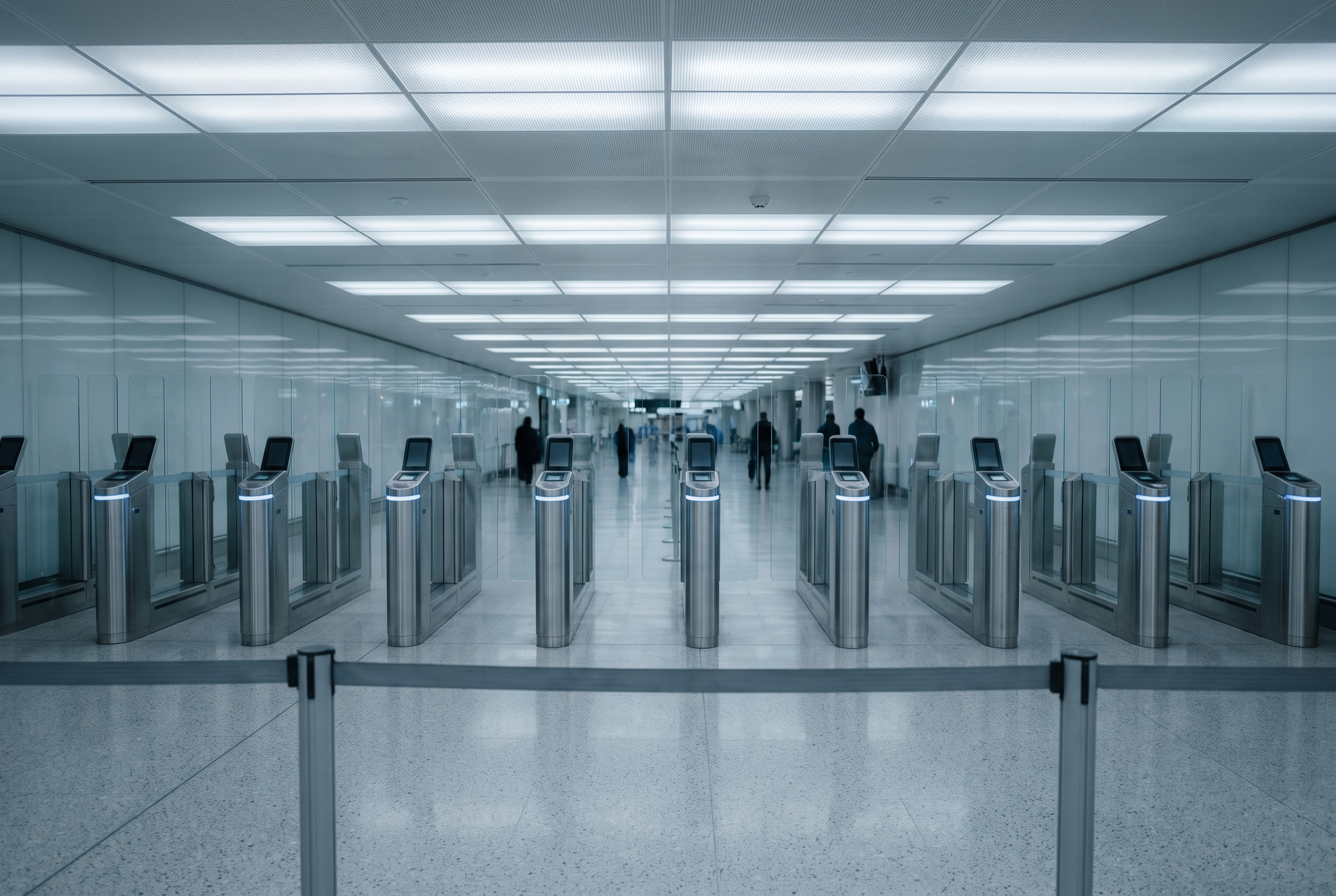
British travellers heading to Europe face tighter border checks from 6 September 2026. The change is about the EU's Entry/Exit System, known as EES. This is an automated system that records travellers from outside the EU each time they cross a Schengen area border. Instead of an officer stamping your passport, the system logs your details, takes your fingerprints and a photo of your face, and records when and where you entered and left. EES was rolled out across the EU earlier in 2026. Because it caused long queues, member states were allowed a temporary flexibility, sometimes called a safeguard mechanism. In exceptional circumstances, such as queues becoming severe, a country could pause the biometric checks and simply wave people through with a basic entry record. That flexibility is what expires on 6 September 2026. From that date, EU countries lose the legal option to switch the biometric checks off when queues build up. Nine countries, including France, Germany, Italy and the Netherlands, asked the European Commission to extend the flexibility. The Commission has indicated it will not extend it further. In practice, this means the full EES process becomes the norm rather than something that could be relaxed at busy times. For travellers, that most likely means longer waits at passport control at major hubs, especially during busy periods.
Why this matters
For anyone travelling from the UK to a Schengen country, this is a practical change that could affect how long you spend at the border. The first time you cross under EES, you have to register your fingerprints and photo. That first registration takes longer than a passport stamp ever did. On later trips the process should be quicker, because your biometrics are already on file, but the first time is the slow one. That matters most for people with tight connections, early flights, or young children and older relatives who do not cope well with long queues. A delay that is merely annoying for a fit adult travelling light can be genuinely difficult for a family, or for someone who is unwell or has limited mobility. It is worth being clear about what has not changed, because coverage of this can sound alarming. Your right to travel to Europe is not affected. UK visitors can still travel to the Schengen area for up to 90 days in any 180-day period without a visa. EES does not change that allowance. It changes how your entry and exit are recorded, not whether you are allowed in. There is also a related system called ETIAS, a travel authorisation you will eventually need to apply for before you go, a bit like the US ESTA. That is separate from EES and has been repeatedly delayed. A 2026 launch is no longer expected, with 2027 now seen as more realistic. So for now, ETIAS is not something you need to arrange.
What the evidence actually says
It is worth separating what is confirmed from what is predicted. Confirmed: the flexibility mechanism is due to expire on 6 September 2026, and the European Commission has signalled it does not intend to extend it. That is the concrete fact. Predicted: exactly how bad the queues will get. Warnings of very long waits at major airports and ports are plausible, and they come from travel industry bodies and border authorities who have watched the system in action since spring. But the specific waiting times quoted in some coverage are estimates, not measurements, and they will vary enormously by location, day and time. There is also genuine uncertainty in the politics. Nine member states asking for an extension, and border authorities voicing concern, means the picture could shift. Governments have some room to prioritise smooth processing, and individual airports vary a great deal in how well prepared they are. France, for example, has said it will use permitted measures to keep waits manageable. So "expect longer queues" is sound advice, while any precise figure should be treated with caution. One thing worth flagging: some of the most dramatic headlines about EES come from sites that cover travel disruption in a sensational way. The underlying change is real and worth planning around. The tone in parts of the coverage is more excitable than the facts require. Plan for extra time; you do not need to panic.
Qurexa perspective
We are a pharmacy and healthcare logistics company, so our angle on travel is a narrow but genuinely useful one: medicines. Longer, less predictable border waits make one piece of standard advice more important than usual. Keep your medicines in your hand luggage, not your checked bag, and carry enough to cover delays. If a border hold, a missed connection or a knock-on cancellation adds a day to your trip, you do not want your tablets sitting in a suitcase in the hold, or worse, in a bag that has gone to the wrong airport. Medicines you take every day, and anything time-critical such as insulin, should always travel with you in the cabin. It is also worth carrying a copy of your prescription or a repeat slip, and keeping medicines in their original labelled packaging. This helps at borders and makes life much easier if you need to see a pharmacist or doctor abroad. If you are a Qurexa customer and you are travelling, it is worth checking well ahead that your repeat prescription will not run out while you are away, and ordering early if it might. Pharmacies get busy, and "I fly on Saturday" is not a fast-track. A little forward planning here removes a real source of holiday stress.
Practical advice
Allow more time at the border, especially for your first trip under EES and at big, busy airports. Build in a buffer for connecting flights. Check your airport's guidance before you travel. Preparedness varies a lot between airports, and many publish current advice on what to expect. Have your passport ready and know that you may be asked to give fingerprints and a facial photo. The first registration is the slow part; later trips should be quicker. Remember the 90 in 180 rule still applies. UK visitors can spend up to 90 days in any 180-day period in the Schengen area without a visa. EES does not change this. You do not need ETIAS yet. It has been delayed and is not required for now. Ignore anyone trying to charge you for it. Keep medicines in your hand luggage, carry extra in case of delays, bring a copy of your prescription, and keep everything in its original labelled packaging. Get appropriate travel insurance and carry a valid GHIC or EHIC for state healthcare in the EU. Border delays are a good reminder to check both are in date before you go. Be patient with border staff. The system is new for them too, and frustration at the desk helps no one move faster.
What to know
From 6 September 2026, the temporary flexibility that let EU countries pause biometric checks under the Entry/Exit System (EES) during busy periods expires, and the European Commission has indicated it will not be extended. Nine member states had asked for more time. EES records non-EU travellers, including UK visitors, using fingerprints and a facial photo instead of a passport stamp. The first registration takes longer than the old stamp; later crossings should be quicker. The likely result is longer queues at passport control, particularly at major hubs and during peak times. Your right to travel is not affected. The 90-days-in-180 visa-free allowance for UK visitors to the Schengen area still stands, and the separate ETIAS travel authorisation has been delayed and is not required for now. Predicted waiting times are estimates and vary widely by airport and time, so plan for extra time rather than fixating on any specific figure. Some coverage is more dramatic than the facts warrant. For medicines, the sensible response is simple: pack them in your hand luggage, carry extra to cover delays, and bring a copy of your prescription. Sources: House of Commons Library, "The EU Entry/Exit system and EU travel authorisation system", https://commonslibrary.parliament.uk/research-briefings/cbp-10676/; The Connexion, "Is the EU set to relax September's strict EES implementation?", 10 July 2026, https://www.connexionfrance.com/news/is-the-eu-set-to-relax-septembers-strict-ees-implementation/801399; Travel Extra, "No more opt-outs for airport queues: EU EES biometric check from September 6", https://www.travelextra.ie/no-opt-outs-for-airport-queues-eu-ees-biometric-check-flexibility-set-to-expire-on-september-6/ This article is for general travel information and does not replace advice from a doctor, pharmacist or other qualified healthcare professional. For medicines and travel, speak to your pharmacist, and check official government travel advice before you travel.
Related articles

Two weekends, two different closures, and a concrete foundation under a tunnel in Glasgow
Network Rail announced on 14 October 2026 that it is carrying out £1.7 million of work on Glasgow's Argyle line and at Glasgow Central Low Level station. The w…
A burst sewer pipe in December 2025, and 1km of track that has to be replaced because of it
Network Rail issued a reminder on 13 October 2026 that the Hertford East branch line closes for nine days, from Saturday 17 to Sunday 25 October 2026. Four sta…
Nine days, one tunnel, and three speed restrictions caused by a dry summer
Network Rail announced on 14 October 2026 that the Hastings line will close for nine days over the October half term. The dates are Saturday 24 October to Sund…