
The Ancient Chinese Text That Helped Inspire a Modern Malaria Medicine
The idea
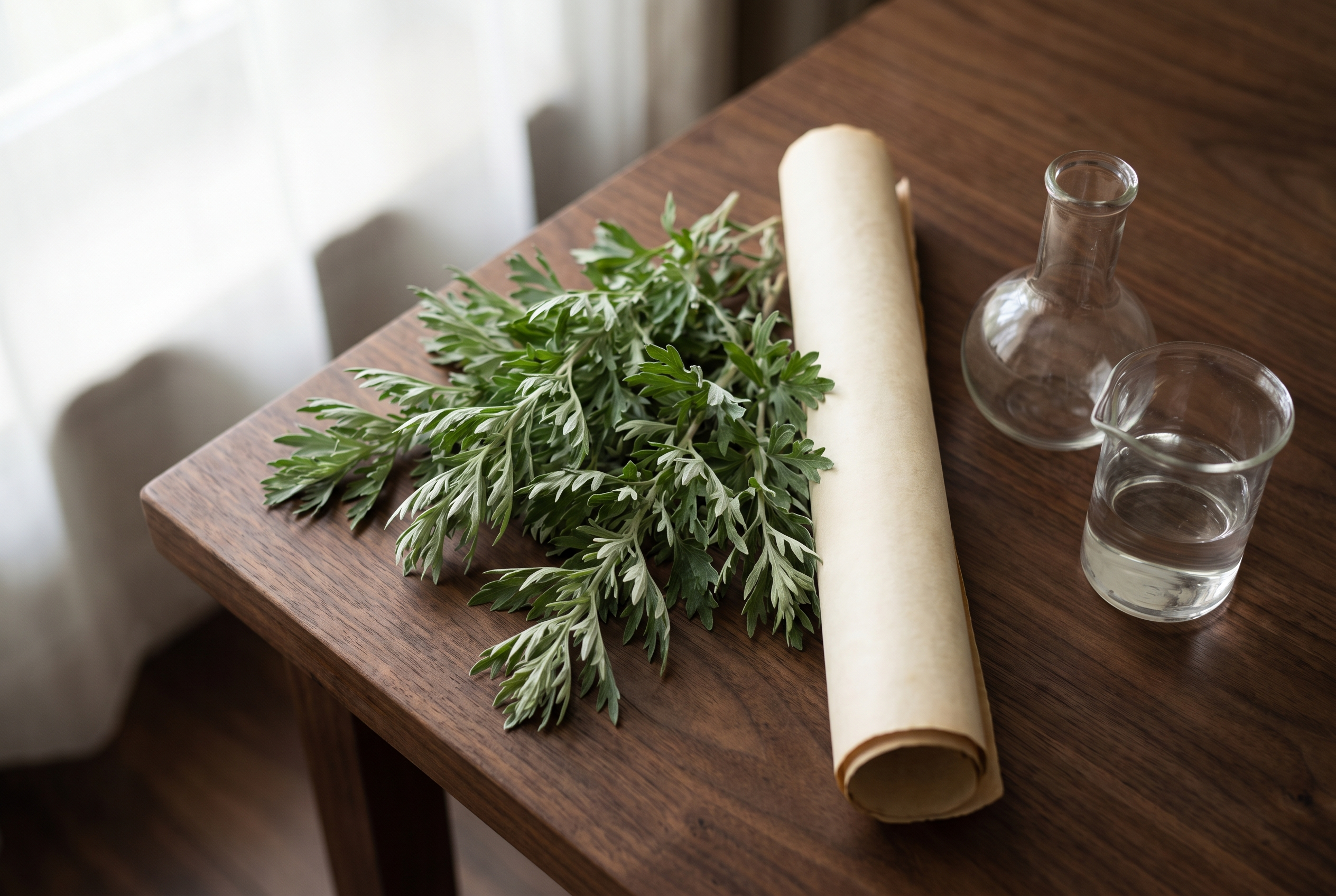
You may have heard that some modern medicines started life in old books. It is true more often than you might think. One of the clearest examples involves a plant called sweet wormwood. Its Latin name is Artemisia annua. A Chinese medical text from the 4th century suggested it for treating fevers. Fever is one of the main signs of malaria. More than 1,500 years later, a Chinese scientist named Tu Youyou went looking through old herbal texts for anything that might help against malaria. This was in the 1970s. Sweet wormwood stood out. She and her team worked on it in the laboratory and pulled out the active substance inside the plant. That substance is called artemisinin. In 2015, Tu Youyou was awarded half of the Nobel Prize in Physiology or Medicine, in the words of the Nobel committee, "for her discoveries concerning a novel therapy against Malaria". So the old text did not hand anyone a finished medicine. What it did was point scientists at the right plant. Everything after that was modern chemistry, testing and years of careful work.
Why this matters
Malaria is still one of the biggest health problems in the world. The World Health Organization reported around 282 million malaria cases and about 610,000 deaths globally in 2024. Most of those deaths were in Africa, and most were young children. That is why artemisinin matters so much. Medicines built around it are now a central part of how malaria is treated worldwide. There is a second reason this story matters, and it is closer to home. It shows what "tested" really means. A plant that has been used for centuries is an interesting clue. It is not proof. The gap between the two is filled by laboratory work, clinical trials and safety checks - and that gap is where the real medicine comes from. It is a good story, and it is also a good reminder. Old does not automatically mean safe. New does not automatically mean better. Evidence is what settles it.
What the evidence actually says
Here is where we need to be careful and precise. The evidence supports the purified drug, not the plant. Artemisinin is not used on its own either. The World Health Organization describes artemisinin-based combination therapies, often shortened to ACTs, as the most effective treatment for malaria caused by the parasite Plasmodium falciparum. A combination therapy pairs artemisinin with a second medicine so the treatment works properly and lasts. Getting from plant to medicine was not simple. Tu Youyou's team found that the way they pulled the substance out of the plant really mattered. Using lower temperatures worked better. Small details like that were the difference between a promising idea and something that actually worked. So what this story does not show is that traditional remedies work in general. One search through old texts found one very good lead. Many other leads went nowhere. That is normal in science, and it is honest to say so. On herbal products you can buy today, the NHS is direct: herbal medicines and complementary therapies "are not tested in the same way as standard medicines to see how well they work". The MHRA, the UK's medicines regulator, has also warned that some unlicensed herbal products sold to the public have been deliberately adulterated with things like heavy metals, arsenic, and prescription-only medicines that should never be in them. In short: a real medicine came from an old plant. That is not the same as saying old plants are medicines.
Qurexa perspective
We are a pharmacy delivery service in Lincolnshire, so we see one part of this every day: what people are actually taking. A lot of people take a herbal supplement or a traditional remedy alongside their prescription, and never mention it. Often that is because it feels too small to bring up, or because it does not feel like "real" medicine. But herbal products can interact with prescribed medicines. The NHS specifically flags statins, antidepressants, warfarin and other blood thinners, hormonal contraception, and medicines for diabetes and blood pressure. So the useful thing we can say is this. Your pharmacist is not going to judge you for taking something herbal. They just need to know it is there, so they can check nothing clashes. And if the practical problem is simply getting to the pharmacy, or remembering doses, that is the part we help with. Our prescription delivery and medication adherence support exist so that the medicine your doctor actually prescribed reaches you and gets taken properly. That is the ordinary, unglamorous half of good treatment - and it is the half that most often goes wrong.
Practical advice
If this topic interests you, here is what is genuinely worth doing. Tell your pharmacist or GP about anything you take that did not come from them. That includes herbal capsules, teas, traditional remedies and supplements. Bringing the box or a photo of the label is easier than trying to remember the name. If you do buy a herbal medicine, look for the THR mark. THR stands for Traditional Herbal Registration. It comes with a nine-digit code and means the product has met UK standards for safety, quality and labelling. It is worth knowing what it does not mean: it is based on traditional use, not on proof that the product works. Be extra careful buying from unfamiliar websites or overseas sellers, because that is where the adulterated products the MHRA warns about tend to turn up. Take more care again if you are pregnant or breastfeeding, if you have kidney or liver problems, or if you are buying for a child - the NHS does not recommend herbal medicines for children. Never stop, start or change a prescribed medicine on your own, and never swap one for a herbal product. If you want to change something, that is a conversation with your GP or pharmacist first. And if you are travelling somewhere with malaria, speak to your GP, pharmacist or a travel clinic well before you go. Malaria prevention and treatment are properly medical matters, and there is no herbal shortcut.
What to know
The short version. A 4th-century Chinese text suggested sweet wormwood for fevers. In the 1970s that clue led Tu Youyou to artemisinin, and in 2015 she shared the Nobel Prize in Physiology or Medicine for it. Today, medicines based on artemisinin are central to malaria treatment worldwide. What that story does not mean is that you can treat yourself with plants. The medicine works because it was purified, tested and combined properly - not because it is old or natural. If you are curious about a traditional or herbal remedy, the right next step is a chat with your pharmacist or GP, who can tell you whether it is safe alongside what you already take. Sources: - The Nobel Prize, "The 2015 Nobel Prize in Physiology or Medicine - Press release" - https://www.nobelprize.org/prizes/medicine/2015/press-release/ - World Health Organization, "Malaria" fact sheet - https://www.who.int/news-room/fact-sheets/detail/malaria - NHS, "Herbal medicines" - https://www.nhs.uk/tests-and-treatments/herbal-medicines/ - GOV.UK (MHRA), "Herbal products: safety update" - https://www.gov.uk/drug-safety-update/herbal-products-safety-update - The Conversation, "How traditional Chinese medicine drove the discovery of a Nobel-winning anti-malarial drug" - https://theconversation.com/how-traditional-chinese-medicine-drove-the-discovery-of-a-nobel-winning-anti-malarial-drug-48645 This article is for general information and does not replace advice from a doctor, pharmacist or other qualified healthcare professional.
Related articles

47% stayed off, 14% called anyone: what 68,000 surveys say about how we handle flu
On 15 October 2026, the UK Health Security Agency (UKHSA) published new findings about what people actually do when they come down with flu-like symptoms. The…
One dose, not two: what WHO's advisers have just said about the HPV jab
The World Health Organization's expert vaccine panel has changed its advice on the HPV jab. The panel is called SAGE, short for the Strategic Advisory Group of…
3.5 million deaths a year, and no level of it is safe
On 15 October 2026, the World Health Organization (WHO) published an update calling on countries to speed up action against lead poisoning. It came just before…