
Free School Meals Widen and 1,400 Breakfast Clubs Open as Term Begins
What happened
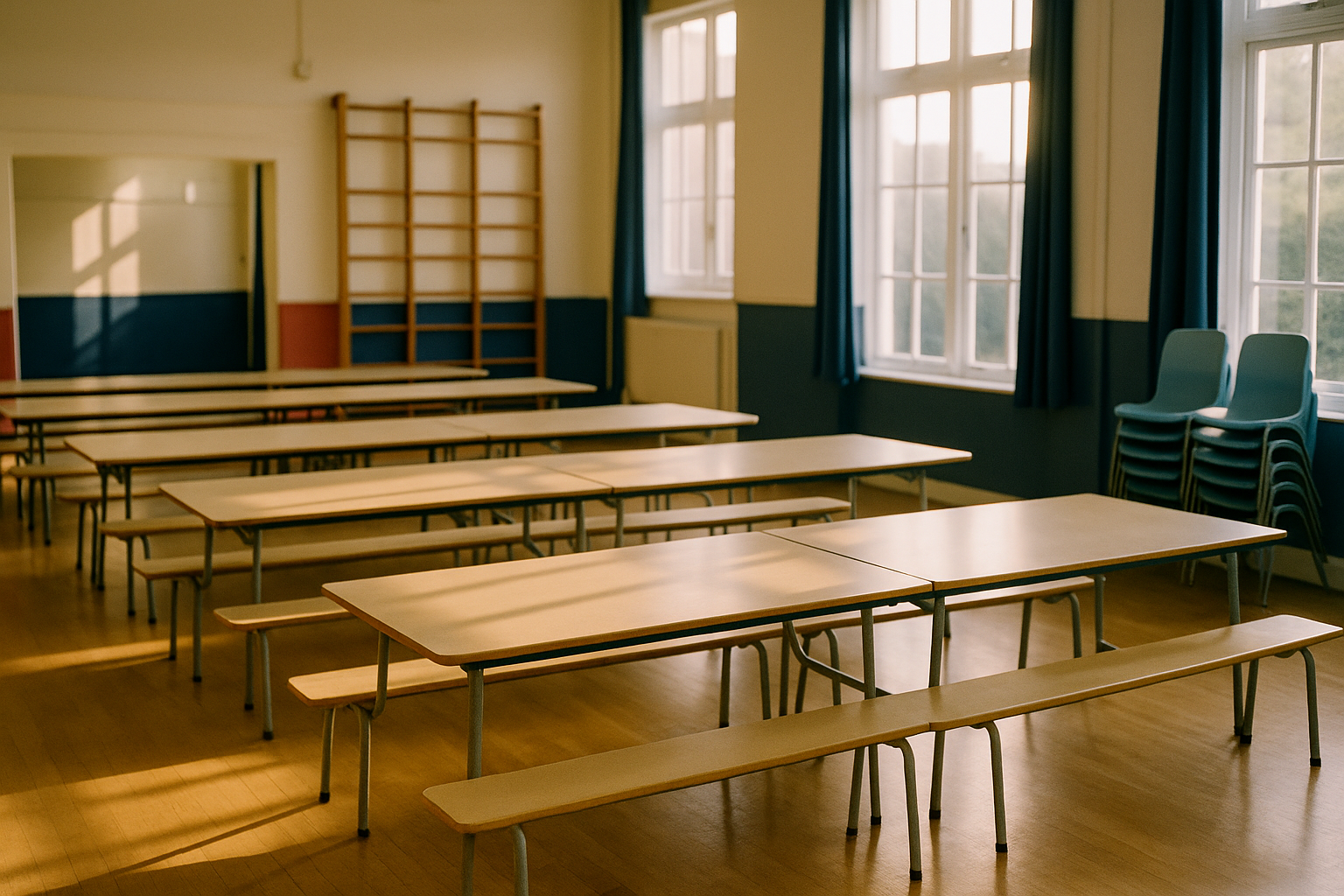
On 1 September 2026, as the new school year started, the Department for Education set out a package of measures aimed at cutting what school costs families. There are five main parts. Free school meals have been widened. Over 3 million children from families receiving Universal Credit are now eligible. Breakfast clubs are expanding, with 1,400 new free breakfast clubs opening in September 2026. Childcare is growing, with 9,000 new places and around 450 school-based nurseries. School uniform costs are being tackled through new limits on how many expensive branded items a school can require. And updated school food standards are due to be published by the end of September. That is the first proper overhaul of those nutrition rules in over a decade. The government says families using free meals, breakfast clubs and cheaper uniforms could save up to £1,200 a year. Eligible working parents using government-funded childcare could save up to £8,000 a year. The wider package is intended to lift more than 500,000 children out of poverty. Education Secretary Lucy Powell presented the changes as a historic expansion of free school meals alongside more breakfast clubs and childcare support.
Why this matters
September is an expensive month for families. Uniform, shoes that fit again, PE kit, bags, equipment. It all lands at once, and it lands whether or not the money is there. The research behind this announcement is blunt about how households cope. Around a third of parents said they cut back on treats or batch cook to stretch budgets. One in ten said they had used a food bank during term time. That last figure deserves a pause. These are families with children in school, during term, not during the holidays when food insecurity usually gets attention. The education argument is simple and well established: hungry children do not learn well. Nick Harrison, Chief Executive of the Sutton Trust, made exactly that point in response to the announcement, saying children cannot learn effectively when hungry. Anna Taylor, Executive Director of The Food Foundation, welcomed the extension of free school meals to families on Universal Credit in England. The uniform measure matters for a different reason. Branded items, where a school insists on a specific jumper or PE top with a logo, are usually far more expensive than equivalent supermarket clothing, and families cannot shop around. Limiting how many branded items a school can require directly reduces a cost that has nothing to do with a child's education.
What the evidence actually says
The savings figures are worth reading carefully, because they are maximums rather than averages. "Up to £1,200 a year" describes a family that uses all three things: free school meals, a free breakfast club and cheaper uniform options. A family that qualifies for none of those saves nothing from this package. A family that qualifies for one saves considerably less than £1,200. That is not a criticism of the policy, but "up to" is doing real work in that sentence and it is fair to say so. The same applies to the £8,000 childcare figure. It refers to eligible working parents making full use of government-funded childcare, which is a specific group. The free school meals expansion is the most clear-cut element. Linking eligibility to receiving Universal Credit is a broader test than the older, narrower income thresholds, and over 3 million children being eligible is a substantial number. On breakfast clubs, the evidence base is reasonably encouraging. Studies of breakfast provision have found benefits for concentration and attainment, particularly for younger children, though effects vary between schools and how the club is run matters. It is also worth being honest that breakfast clubs help with childcare and the morning rush as much as with nutrition, and for many working parents that is the bigger practical gain. The food standards overhaul cannot be assessed yet, because the updated standards have not been published. They are expected by the end of September 2026.
Qurexa perspective
Qurexa delivers groceries as well as prescriptions across Lincolnshire, so household food budgets are something we see up close. One pattern is worth naming. When money is tight, the food that goes first is usually fresh: fruit, vegetables, fish. Those are the items that are easiest to cut and hardest to replace nutritionally. Cheaper, longer-lasting food fills the gap, and it fills stomachs, but the balance shifts. So a policy that guarantees a child a proper meal at school on weekdays is doing something real, and not only for the child. It takes pressure off the whole week's budget. If your family is newly eligible for free school meals, one honest piece of encouragement: please claim. Take-up is never complete, and a common reason is not knowing you qualify. There is no queue you are jumping and no one else who loses out because you applied. It is also worth knowing that registering for free school meals often unlocks extra funding for your child's school through the pupil premium, even in areas where all infant children already get a meal. Applying can help the school as well as your family.
Practical advice
Here is what to actually do this month. Check whether you now qualify for free school meals. Eligibility has widened to families receiving Universal Credit. Apply through your local council; most councils have an online form that takes a few minutes. Do not assume the school will do it for you. Ask your school whether it is opening a free breakfast club. With 1,400 new clubs opening this September, yours may be new to it. Clubs are usually free at the point of use and can solve a childcare problem as well as feeding your child. On uniform, check your school's policy against the new limits on branded items. If your school still requires more branded items than allowed, raise it with the school office or governors. Many schools also run second-hand uniform sales or swap schemes, and parent groups often organise these informally. If you use childcare, check whether you qualify for government-funded hours, especially with 9,000 new places and around 450 school-based nurseries coming. If you are struggling right now, contact the school directly. Schools often have small hardship funds, uniform stock and links to local support, and they generally prefer to help quietly than to see a child go without. Finally, watch for the updated school food standards at the end of September if what your child is served matters to you.
What to know
On 1 September 2026 the Department for Education announced a package to reduce school costs: free school meals extended to over 3 million children in families on Universal Credit, 1,400 new free breakfast clubs opening this month, 9,000 new childcare places and around 450 school-based nurseries, new limits on branded uniform items, and updated school food standards due by the end of September. Headline savings are up to £1,200 a year for families using meals, breakfast clubs and cheaper uniforms, and up to £8,000 a year for eligible working parents using funded childcare. The measures are intended to lift over 500,000 children out of poverty. Read "up to" carefully: the biggest savings go to families who qualify for and use everything on offer. The single most useful action is to check your free school meals eligibility with your local council, because eligibility has genuinely widened and take-up is never complete. It costs a few minutes and can benefit both your family and your child's school. Sources: Department for Education, "Breathing space for families as government eases school costs", 1 September 2026, https://www.gov.uk/government/news/breathing-space-for-families-as-government-eases-school-costs | GOV.UK, "Apply for free school meals", https://www.gov.uk/apply-free-school-meals | The Food Foundation, https://foodfoundation.org.uk/ This article is for general information about school costs and support and does not replace official guidance from your local council or school. For advice on your child's diet, growth or health, please speak to a GP, school nurse, pharmacist or other qualified healthcare professional.
Related articles

Phone-Free Schools Become Law This Term: What It Means for Your Child
Rules on mobile phones in schools in England have changed from guidance into something with legal force, and schools began following the new arrangement from 1…

Student Nurses Will No Longer Have to Pay for Placements Up Front
Healthcare students will no longer have to pay for their clinical placements out of their own pockets and wait to be paid back. The Department of Health and So…
New School Safeguarding Rules Start Today: What Parents Should Know
As children go back to school this week, the rules that schools must follow to keep them safe have been updated. "Keeping children safe in education" is the st…