
Robot Tomato Pickers and Hoverflies: £13m Backs Farming's Next Ideas
What happened
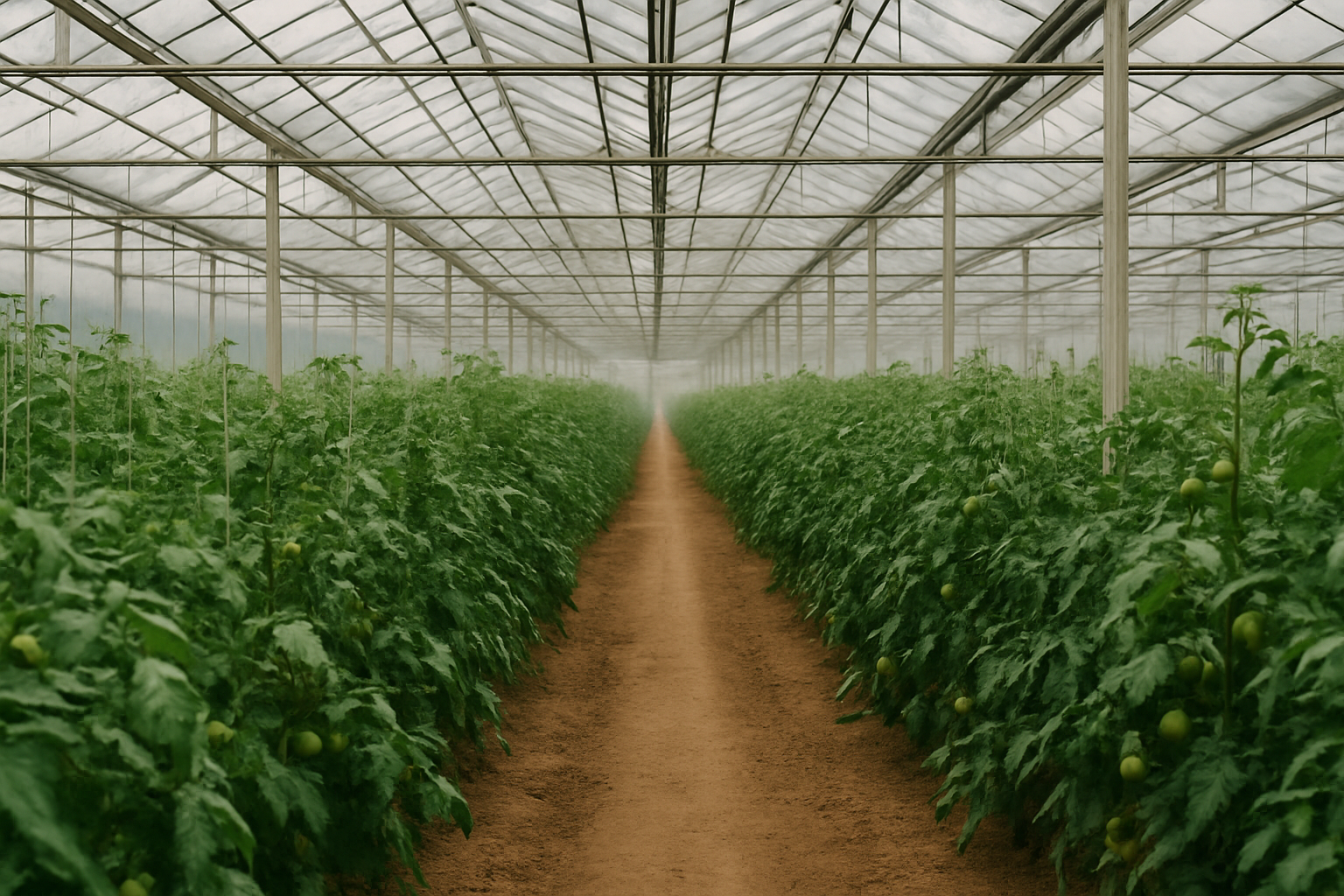
On 1 September 2026 the government announced £13 million for the latest round of its Farming Innovation Programme. The money goes to researchers, farmers and agri-tech businesses working on new products and services for farming. Individual projects can receive between £1 million and £3 million, spread over up to three years, through a grant scheme called Small R&D Partnerships, now in its fifth round. Three of the funded projects give a good sense of the range. One, called Vitrum, is developing robotic harvesters that use artificial intelligence to pick tomatoes. The aim is to help with labour shortages in horticulture. Another is working on a new and improved vaccine for pigs against a bacterial infection called Streptococcus suis. Part of the point is to cut how many antibiotics are needed on farms. The third, FLYTHRIVE, is studying how hoverflies can be used as natural pest control in berry crops, reducing the need for chemical pesticides. Environment Secretary Dame Angela Eagle said the funding "will take brilliant ideas off the drawing board and put them to the test on farms, turning cutting-edge research into practical solutions". Chris Danks, Head of Agrifood at Innovate UK, said innovation is critical to supporting a productive, resilient and competitive farming sector. The £13 million sits inside a wider £123 million of agricultural innovation investment this year, and a commitment to invest at least £200 million in agricultural innovation by 2030.
Why this matters
Most of us think about farming only when food prices move. But the things that make food expensive or hard to get usually start years earlier, in whether farms can grow crops reliably and affordably. British horticulture has a real labour problem. Picking soft fruit and salad crops is skilled, seasonal, physically demanding work, and there have not been enough people willing and able to do it. Crops left unpicked in a field are money lost and food wasted. The antibiotics project matters for a different and arguably bigger reason. Antibiotics used in farming are part of the same global picture as antibiotics used in people. The more they are used anywhere, the more chances bacteria get to become resistant to them. Antibiotic resistance is one of the slowest-moving and most serious threats to modern medicine, because it quietly undermines routine operations, cancer treatment and childbirth safety. A vaccine that stops pigs getting ill in the first place means fewer antibiotics need to be used at all. That is prevention rather than treatment, and it is the direction most experts want farming to go. The hoverfly project is the same logic applied to pesticides: use nature to do a job instead of chemicals, where that works.
What the evidence actually says
It is worth keeping expectations honest here. This is research funding, not a product launch. Small R&D Partnerships grants run for up to three years. What is being funded is the testing phase: taking an idea that looks promising in a laboratory or a small trial and finding out whether it works on real farms, at a workable cost. Some of these projects will succeed. Some will not. That is what research funding is for, and a scheme where everything succeeded would be a scheme aiming too low. So nobody should expect robot-picked tomatoes in the shops next season, or a pig vaccine in use across the country by next year. Agricultural technology has a long history of impressive demonstrations that took a decade to become ordinary. The underlying reasoning, though, is well supported. Vaccination reducing the need for antibiotics in livestock is an established principle, not a novel claim. Using beneficial insects for pest control, often called biological control, is also long established in glasshouse growing in particular. What is new here is the specific application: this particular pig vaccine, hoverflies in these berry crops, AI-guided picking of a crop as soft and easily bruised as a tomato. Tomatoes are a genuinely hard robotics problem, which is part of why it is interesting. The funding scale is also worth reading properly. £13 million is a single competition round, within £123 million this year and at least £200 million pledged by 2030.
Qurexa perspective
Qurexa delivers groceries as well as prescriptions, so the food supply chain is not an abstract topic for us. When harvests fail or labour runs short, we see it as gaps on lists and higher prices for households that can least absorb them. But the part of this announcement that connects most directly to our work is the antibiotics one. We are a pharmacy delivery business. Antibiotic resistance is the reason your GP or pharmacist may decline to give you antibiotics for a cough that is almost certainly viral, and the reason you are asked to finish a course exactly as prescribed rather than saving some for next time. Those conversations can feel frustrating when you are ill and want something done. Seeing farming tackle the same problem from the other end is a useful reminder that this is a shared effort. It is not only patients being asked to be careful. The practical version for our customers is simple and unchanged: never take antibiotics left over from a previous illness, never take someone else's, and do not press for antibiotics when a clinician has explained they will not help. Every unnecessary course makes the next one slightly less likely to work.
Practical advice
This is mostly a policy and research story, but there are a few things worth taking from it. If you are a farmer, grower or work in agri-tech, the Farming Innovation Programme runs competition rounds, and details of eligibility and future rounds are published by Defra and Innovate UK. If you have an idea being held back by the cost of on-farm testing, this is the sort of scheme designed for exactly that. If you are a shopper, the honest advice is not to change anything based on this announcement. It will not affect what is on the shelf this year. If you want to support British growers, buying seasonal British produce is a more direct route than anything in this story. On antibiotics, which is the part most likely to touch your own health: take them only when prescribed, take the full course as directed, never share them, and return unused antibiotics to a pharmacy rather than binning or flushing them. Pharmacies take back unused medicines and dispose of them safely. And if you are curious about how food gets to you, the funded projects here are a decent window into it. Most of the interesting work in farming right now is about doing more with fewer inputs, whether that input is labour, chemicals or medicines.
What to know
On 1 September 2026 the government announced £13 million for the latest Farming Innovation Programme round, with grants of £1 million to £3 million over up to three years. It is part of £123 million of agricultural innovation funding this year and a pledge of at least £200 million by 2030. Funded projects include AI-driven robotic tomato harvesters to address labour shortages, an improved pig vaccine intended to reduce antibiotic use on farms, and research into using hoverflies as natural pest control in berry crops. This is research funding, so the sensible expectation is trials and results over the next few years, not products on shelves next season. The thread linking these projects is prevention: preventing crop losses, preventing infections so antibiotics are not needed, preventing pest damage without reaching for chemicals. That is the same principle that runs through good healthcare, which is probably why it is a strategy worth backing. Sources: Department for Environment, Food and Rural Affairs, "£13m to turn cutting-edge research into real-world, farming solutions", 1 September 2026, https://www.gov.uk/government/news/13m-to-turn-cutting-edge-research-into-real-world-farming-solutions | Innovate UK, Farming Innovation Programme, https://iuk.ktn-uk.org/programme/farming-innovation-programme/ | NHS, "Antibiotics", https://www.nhs.uk/conditions/antibiotics/ This article is for general information and does not replace advice from a doctor, pharmacist or other qualified healthcare professional. Always take antibiotics exactly as prescribed and speak to your pharmacist or GP practice if you have questions about your medicines.
Related articles

Switched on in 1956, switched off in 2003, and now being taken apart piece by piece
Seventy years ago, in October 1956, Queen Elizabeth II opened Calder Hall on the Sellafield site in west Cumbria. It was the world's first nuclear power station…
25 storms, £179,000 of delay each, and ten weather stations bolted to masts already standing
On 14 October 2026, Network Rail announced that its Wales and Borders route has become the first in Britain to turn existing railway radio masts into weather st…
Two dead satellites, 17,000 mph, and one refuellable spacecraft sent to fetch them
On 15 October 2026, the UK government confirmed funding for a mission to go up and fetch two dead satellites. It is called the UK Active Debris Removal mission…