
Why the WHO Is Worried About Yellow Fever Reaching Cities
What happened
The World Health Organization has published a handbook to help countries prepare for something they very much hope will not happen: yellow fever taking hold in a city. The document, "Urban yellow fever risk management: handbook for national preparedness and response planning", was published on 31 August 2026. It runs to 80 pages and comes from the WHO's Epidemic and Pandemic Management team. It is organised around seven preparedness and response pillars. The warning at its centre is unusually blunt. The WHO states that even a single yellow fever case in an urban setting can signal a potential public health emergency, in places where the Aedes aegypti mosquito is present and population immunity is low. That is a striking threshold. For most diseases, one case is not an emergency. The handbook explains why yellow fever is different, and gives countries practical tools and checklists covering early detection and rapid response coordination, surveillance and laboratory testing, community engagement and clinical care, vaccination, mosquito control, and managing travel and population movement. The guidance arrives against a live backdrop. In South America, 79 confirmed yellow fever cases have been reported since the start of 2026 across six countries: Bolivia, Brazil, Colombia, Ecuador, Peru and Venezuela. That follows a difficult 2025, when 346 confirmed cases and 143 deaths were reported from seven countries in the region — a 5.6-fold increase in cases compared with 2024. Cases continue to be reported in parts of Africa and South America.
Why this matters
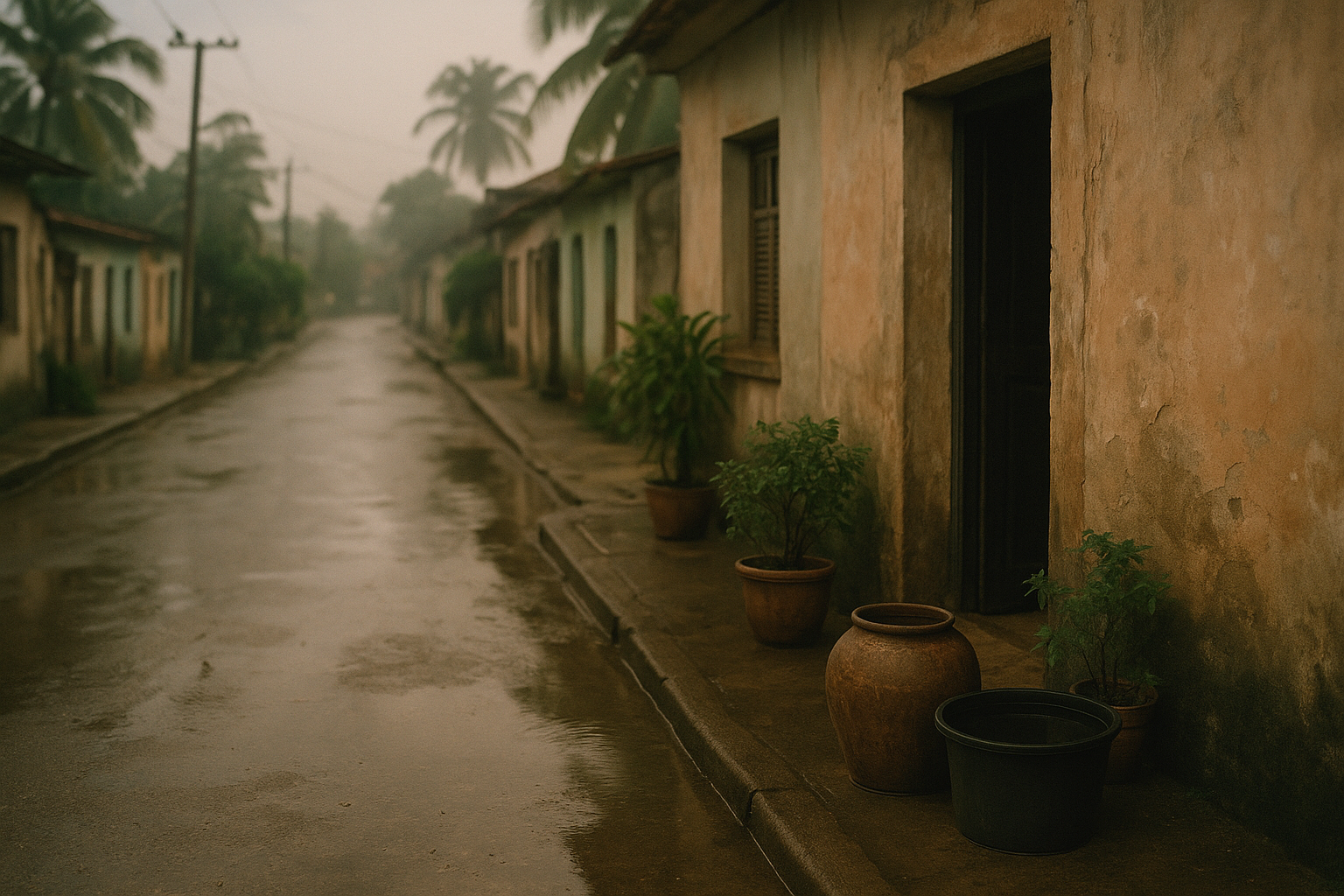
To understand the WHO's concern, it helps to know that yellow fever behaves in two quite different ways. In its usual pattern, the virus circulates between monkeys and forest-dwelling mosquitoes. People get infected when they enter or live near forest areas. Outbreaks in this pattern tend to be limited, because the number of people exposed is limited. The urban pattern is different and far more dangerous. It involves Aedes aegypti — a mosquito that lives comfortably alongside humans, breeds in small containers of standing water like buckets, tyres and plant pots, and bites during the day. When yellow fever starts passing from person to mosquito to person in a dense city, the number of people who can be infected rises enormously. This is the same mosquito responsible for spreading dengue, Zika and chikungunya, and it is now established across large parts of the tropics and subtropics, including in many rapidly growing cities. Add low vaccination coverage and you have the combination the WHO is warning about. That is why a single urban case is treated as a signal rather than an isolated event: it may be the first visible sign of transmission that is already underway. The encouraging part of this story is that yellow fever is vaccine-preventable, and the vaccine is highly effective. Unlike the Bundibugyo Ebola outbreak currently affecting central Africa, where no licensed vaccine exists, the tool needed here already exists. The challenge is getting it to enough people before an outbreak starts, not inventing it.
What the evidence actually says
Some precision is needed here. First, on what this publication is. It is preparedness guidance, not an announcement of an urban outbreak. Nothing in it says yellow fever has established itself in a major city. It is a document about planning for a scenario, which is a normal and sensible part of public health work. Second, on the South American figures. The 79 confirmed cases reported so far in 2026 sit against 346 confirmed cases in 2025. On the face of it, that looks like a substantial decrease. It would be wrong to read too much into a comparison of a part-year figure with a full-year one, and yellow fever transmission is strongly seasonal. What can reasonably be said is that 2025 was a notably bad year — a 5.6-fold increase on 2024 — and that transmission is continuing in 2026. Third, on severity. Many yellow fever infections are mild or produce no symptoms at all. A minority of people go on to a severe phase involving jaundice, which is where the disease gets its name, bleeding and organ failure. Among those who reach that severe stage, death is common. There is no specific antiviral treatment; care is supportive. Fourth, on the vaccine. A single dose of yellow fever vaccine is considered to give long-lasting protection for most people, and it is recommended for travellers aged nine months and over going to areas with a risk of transmission, unless there is a medical reason not to have it. It is a live vaccine, so it is not suitable for everyone — which is precisely why individual advice matters.
Practical advice
**Book travel health advice four to six weeks before you go.** This is the single most useful thing in this article. Yellow fever vaccine needs time to take effect, and a yellow fever certificate is only valid from 10 days after vaccination. **Check whether a certificate is required for entry.** Some countries require proof of yellow fever vaccination as a condition of entry, particularly if you are arriving from a country with a risk of transmission. This is a legal entry requirement, separate from the medical recommendation, and being turned away at a border is a genuinely miserable way to start a holiday. **Use a registered yellow fever vaccination centre.** In the UK, the certificate must be issued by a registered centre. Your GP practice may or may not be one. **Tell the clinic about your health honestly.** Yellow fever vaccine is a live vaccine. If you are pregnant, breastfeeding, have a weakened immune system, are over 60, or have had a thymus disorder, say so. There are situations where the vaccine is not advised and a waiver letter is more appropriate. **Do not rely on the vaccine alone.** Aedes aegypti bites during the day. Use repellent containing DEET, cover up at dawn and dusk and through the day, and use air conditioning or screens where you can. These measures also protect against dengue, Zika and chikungunya, for which there is no equivalent travel vaccine. **Seek medical advice quickly if you become unwell after travel,** and say where you have been.
What to know
The WHO published an 80-page handbook on 31 August 2026 to help countries prepare for urban yellow fever outbreaks. Its central warning is that a single yellow fever case in a city where Aedes aegypti mosquitoes are present and immunity is low can signal a potential public health emergency. The reason is the shift from the forest transmission pattern, which is naturally limited, to an urban pattern involving a mosquito that lives alongside people, breeds in small containers of water and bites during the day. In a dense city, that can spread very fast. Context: 79 confirmed cases have been reported in South America since the start of 2026 across six countries, following 346 confirmed cases and 143 deaths in the region in 2025 — itself a 5.6-fold rise on 2024. Cases continue in parts of Africa and South America. The good news is that yellow fever is vaccine-preventable with a highly effective vaccine. There is no specific treatment, so prevention does the work. If you are travelling to an affected region: get travel health advice four to six weeks before departure, check whether a vaccination certificate is required for entry, remember the certificate is valid only from 10 days after vaccination, and use daytime mosquito bite protection regardless. Sources: World Health Organization, "Urban yellow fever risk management: handbook for national preparedness and response planning", 31 August 2026, https://www.who.int/publications/i/item/9789240122581 | National Travel Health Network and Centre (TravelHealthPro), "Yellow fever update", 2026, https://travelhealthpro.org.uk/news/765/yellow-fever-update | NaTHNaC Yellow Fever Zone, "Yellow fever update", 2026, https://nathnacyfzone.org.uk/news/166/yellow-fever-update This article is for general information and does not replace advice from a doctor, travel health clinic, pharmacist or other qualified healthcare professional. Yellow fever vaccine is not suitable for everyone — always seek individual advice from a registered yellow fever vaccination centre.
Related articles

Two weekends, two different closures, and a concrete foundation under a tunnel in Glasgow
Network Rail announced on 14 October 2026 that it is carrying out £1.7 million of work on Glasgow's Argyle line and at Glasgow Central Low Level station. The w…
A burst sewer pipe in December 2025, and 1km of track that has to be replaced because of it
Network Rail issued a reminder on 13 October 2026 that the Hertford East branch line closes for nine days, from Saturday 17 to Sunday 25 October 2026. Four sta…
Nine days, one tunnel, and three speed restrictions caused by a dry summer
Network Rail announced on 14 October 2026 that the Hastings line will close for nine days over the October half term. The dates are Saturday 24 October to Sund…