
The World Is Growing Less Tobacco. Africa Is Growing More
What happened
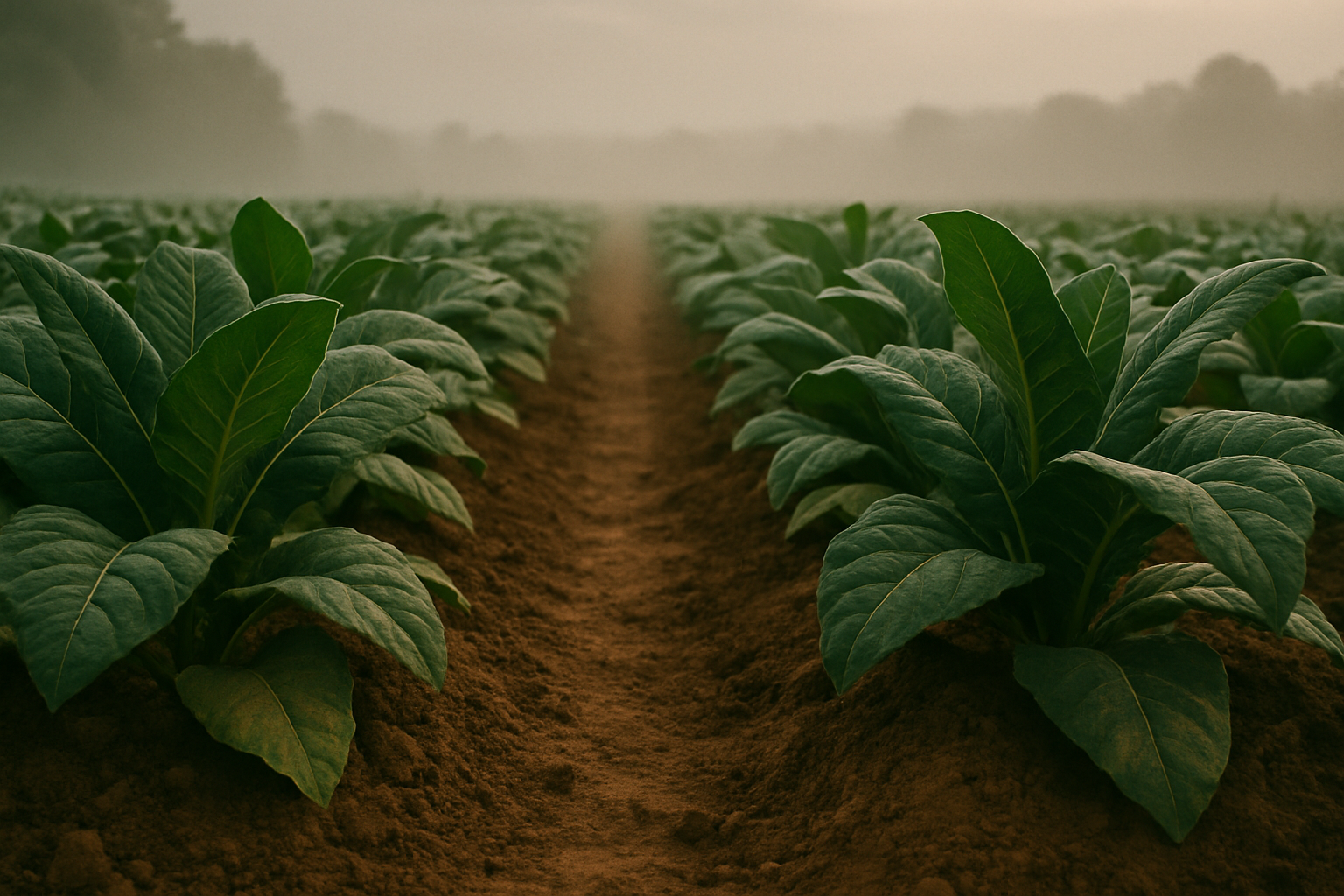
The World Health Organization has published a report showing that the world is growing less tobacco overall — but that Africa is moving in the opposite direction. The report, "Status of tobacco production and trade in Africa", was published on 31 August 2026. It is the second edition, updating an earlier version, and runs to 23 pages. The headline figures are striking. Between 2012 and 2024, global tobacco leaf production fell by 18.8 per cent. Over the same period, African production rose by 8.61 per cent. Production on the continent is also highly concentrated. Just 10 countries account for 93.1 per cent of Africa's tobacco leaf production. The trade picture has two sides. Africa remains a net exporter of tobacco leaf, meaning it sends out more raw tobacco than it brings in. At the same time, the continent's cigarette import bill has more than doubled since 2012. In other words, more raw leaf goes out, and more finished cigarettes come in. The WHO's assessment of why this is happening is direct. As regulation of tobacco tightens in wealthier countries, tobacco companies are redirecting investment towards African countries to expand leaf production. The report also states plainly that tobacco growing damages the environment and threatens health — not only the health of people who smoke, but of the people and places involved in producing it.
Why this matters
It is tempting to read falling global tobacco production as straightforwardly good news. This report is a useful corrective. Production is not disappearing so much as moving. That shift matters because of where it is moving to. Tobacco control laws — advertising bans, plain packaging, high taxes, smoke-free public spaces — are strongest in wealthier countries and are often weaker or newer elsewhere. If growing and selling shifts towards places with less established regulation, the overall health harm does not fall in proportion to the production figures. The concentration figure matters too. When 10 countries account for over 93 per cent of production, the decisions of a small number of governments carry a great deal of weight, and those governments face a genuinely difficult trade-off. Tobacco is a cash crop. It brings in export earnings and supports rural incomes. Telling farmers to grow something else is easy to say and hard to do without a credible alternative. The trade pattern the WHO describes should also give pause. Exporting raw leaf while importing more and more finished cigarettes is not a comfortable position. The value added in manufacturing largely happens elsewhere, while the health costs of consumption increasingly land at home. And then there is the environmental dimension. Tobacco is a demanding crop. It uses land that could grow food, it is associated with deforestation where wood is used for curing leaf, and it involves heavy pesticide use. These costs fall on farming communities regardless of whether anyone in those communities smokes.
What the evidence actually says
A few clarifications, because production statistics are easy to misread. First, these are production and trade figures, not smoking rates. The report describes how much tobacco is grown and traded. It does not directly tell us how many people smoke, in Africa or anywhere else. Those are related but separate questions, and it would be wrong to convert one into the other. Second, an 8.61 per cent rise over twelve years is real but moderate. It is a steady climb, not an explosion. The reason it stands out is the contrast: the world fell 18.8 per cent while Africa rose. Direction, rather than magnitude, is what makes it notable. Third, "Africa" is not one place. With 93.1 per cent of production concentrated in 10 countries, most African countries are barely involved in growing tobacco at all. Generalising across a continent of more than 50 countries would be sloppy. Fourth, on the claim that companies are redirecting investment towards Africa as regulation tightens elsewhere: this is the WHO's assessment in this report. It is a considered judgement from the leading global health body, and it is consistent with the trade patterns described. It is worth reading it as an interpretation of the data rather than as a directly measured quantity. Finally, what is not in doubt: the health harms of smoking itself. That evidence base is enormous, consistent and settled. Nothing in this report is a close call on that point.
Practical advice
This is a global policy story rather than a personal health story, but there are still useful things to take from it. **If you smoke, stopping remains the single most valuable thing you can do for your health.** That is true regardless of what production statistics say, and it is never too late for it to be worth doing. **Use the free help.** In England, NHS stop smoking services are free and substantially improve your chances compared with willpower alone. Combining behavioural support with a stop smoking aid works better than either by itself. Your GP practice or pharmacy can refer you. **Expect to try more than once.** Most people who stop successfully have made several previous attempts. A relapse is a normal part of the process, not evidence that you cannot do it. **Do not assume any product is harmless.** Waterpipe, roll-ups and smokeless tobacco all carry risks. If you are considering vaping specifically as a way of stopping smoking, discuss it with a pharmacist or stop smoking adviser, who can give you current, balanced advice. **If you are a parent, know that adult behaviour is influential.** Young people are considerably more likely to take up smoking if it is normal around them. **Be a careful reader of statistics.** "Global production is falling" and "the problem is shrinking everywhere" are not the same statement. This report is a neat illustration of why.
What to know
The WHO published the second edition of "Status of tobacco production and trade in Africa" on 31 August 2026. Between 2012 and 2024, global tobacco leaf production fell 18.8 per cent while African production rose 8.61 per cent. Just 10 countries account for 93.1 per cent of the continent's production. Africa remains a net exporter of tobacco leaf, but its cigarette import bill has more than doubled since 2012. The WHO's assessment is that tobacco companies are shifting investment towards African countries as regulation tightens in wealthier nations, and it states that tobacco growing damages the environment and threatens health. The key interpretive point: falling global production does not mean the harm is falling everywhere. Production appears to be relocating rather than simply disappearing, and it is relocating towards places where tobacco control regulation is often less established. A note on limits: these are production and trade figures, not smoking rates, and "Africa" here really means a small group of producing countries rather than the whole continent. If this story prompts one action: if you smoke, ask your pharmacist or GP practice about free NHS stop smoking support. It genuinely works better than going it alone. Sources: World Health Organization, "Status of tobacco production and trade in Africa, 2nd ed.", 31 August 2026, https://www.who.int/publications/i/item/9789240125162 | World Health Organization, "Tobacco production and trade in Africa" (first edition), WHO IRIS repository, https://iris.who.int/bitstream/handle/10665/339551/9789240020009-eng.pdf?sequence=1 | tralac Trade Law Centre, "Tobacco in Africa: production and trade", https://www.tralac.org/publications/article/13710-tobacco-in-africa-production-and-trade.html This article is for general information and does not replace advice from a doctor, pharmacist or other qualified healthcare professional. If you want help to stop smoking, your GP practice or local pharmacy can point you to free NHS support.
Related articles

The first thing you say matters, and most of us have no idea what it should be
On 15 October 2026, the Ministry of Justice launched a campaign called Respond. It sits within the government's wider ENOUGH campaign on violence against women…
Legal to buy from today, illegal after 11pm: what the fireworks rules actually say
On 15 October 2026, the Office for Product Safety and Standards (OPSS) launched a campaign about fireworks. Its title is 'Think Beyond your garden, Know your Im…
Update: the driest April to September in over a century, and six counties now in severe drought
This is a follow-up to a story we have covered before, because something significant has changed. On 15 October 2026, the government declared severe drought in…