
AI Watched a Brain Operation Live and Helped Save a Man's Sight
What happened
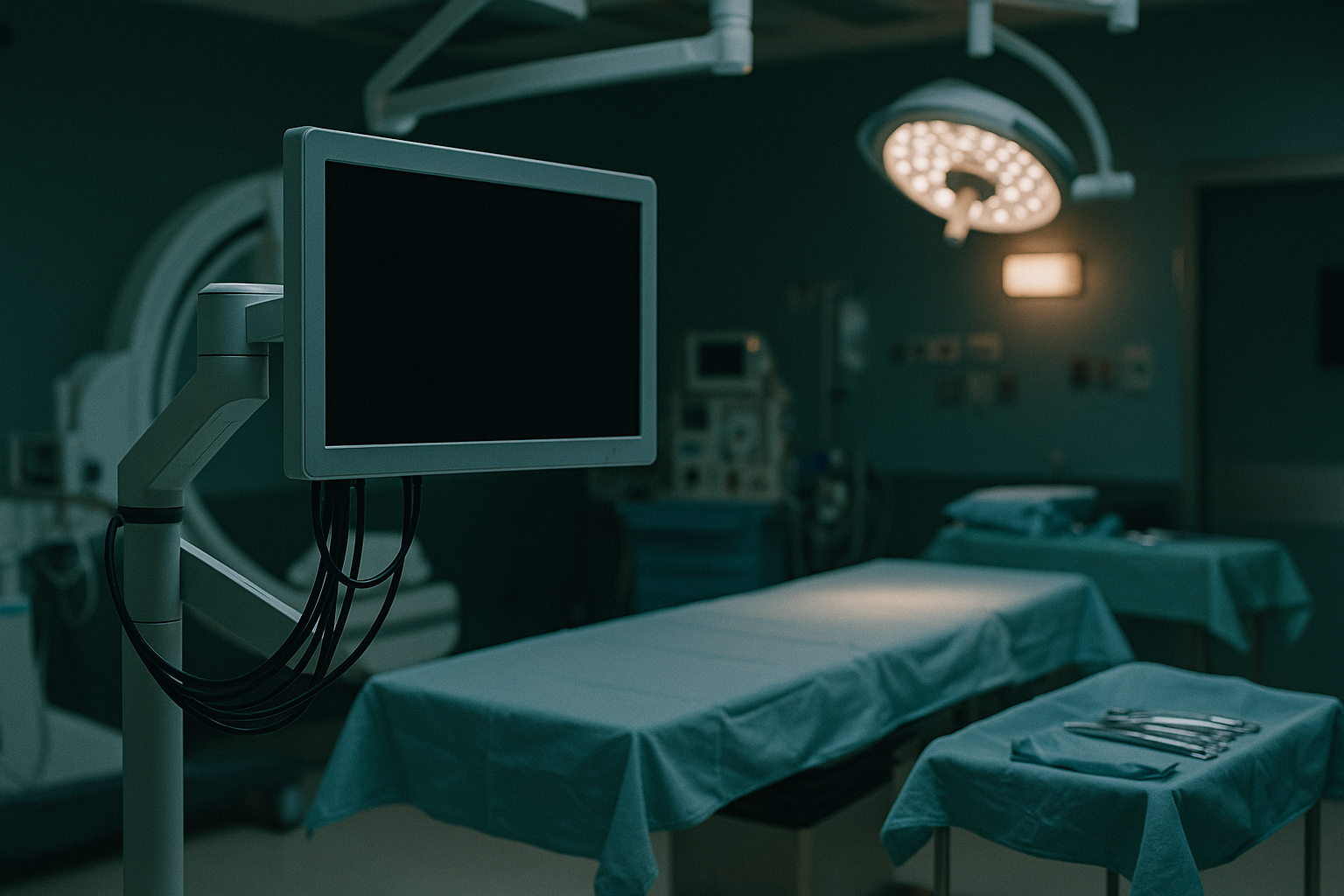
Surgeons in London have used artificial intelligence during a live brain operation for what is believed to be the first time anywhere in the world. The operation took place at the National Hospital for Neurology and Neurosurgery, part of University College London Hospitals NHS Foundation Trust. It was carried out in May 2026, but details were only made public on 27 August, once the patient had recovered. The patient was Rhys Hibbert, a 48-year-old customer services manager from Bedfordshire. He had a tumour on his pituitary gland. Without surgery, doctors said the tumour would have continued to threaten his sight and could eventually have caused blindness. What made this operation different was how the AI was used. Computer systems have been helping surgeons for years, but usually by working from scans taken before the operation begins. This system did something harder: it analysed the live video feed from inside the patient's head, in real time, as the surgery was happening. It highlighted and colour-coded the critical structures around the tumour, including nerves and blood vessels. That area of the head is extraordinarily crowded. The pituitary gland is roughly the size of a marble, and packed tightly around it are major blood vessels and the nerves that carry vision. A surgeon working there is operating within millimetres of structures where a mistake can cause blindness, a stroke or worse. The operation was performed by Hani Marcus, consultant neurosurgeon at the hospital and professor of neurosurgery at the UCL Queen Square Institute of Neurology, working with Danyal Khan, the surgical resident leading the work. The tumour was removed and Mr Hibbert's vision was protected.
Why this matters
The important word in this story is "live". Up to now, most surgical computer guidance has worked like a map made before the journey. A scan is taken, the anatomy is mapped, and the surgeon uses that map during the operation. It is genuinely useful, but it has a well-known weakness: the body does not stay still. Tissue shifts, fluid drains, and structures move as the operation proceeds. The map slowly stops matching the territory. A system reading the live camera feed does not have that problem in the same way. It is looking at what is actually there, right now, and pointing out what matters. It is closer to having a very experienced second pair of eyes on the screen than to following a printed map. Why pituitary surgery? Because it is one of the places where the margin for error is smallest and the consequences are most visible. Getting it right protects sight. Getting it wrong can take sight away. If a technology can prove itself there, that says something. There is also a workforce point worth making. Neurosurgeons of this level of experience are rare, and they take many years to train. A tool that helps highlight critical anatomy could, in time, help less experienced surgeons work more safely, and help experienced ones work with a little more confidence during the hardest moments of a long operation. And for the person on the table, the outcome is not abstract at all. A man kept his eyesight.
What the evidence actually says
Here is where some restraint is needed, because "world first" headlines invite conclusions the facts do not yet support. This is one operation, on one patient. It succeeded, which is genuinely good news and a real technical achievement. But a single successful case cannot tell us whether the technology improves outcomes on average, whether it works as well in less straightforward tumours, or whether it might occasionally mislead a surgeon rather than help. Those questions are answered by clinical trials comparing many patients with and without a technology, over time. That is exactly the process the robotic knee surgery field has recently been through, where a technology that was more precise turned out not to change how patients felt. It is a useful cautionary comparison. Being technically impressive and being clinically better are two different things, and the gap between them is only closed by evidence. It is also worth being clear about what the AI did and did not do. It did not perform the operation. It did not make decisions. It highlighted structures on a video feed for human surgeons, who remained in control throughout. Descriptions of AI "doing" surgery would be inaccurate. What this case does establish is feasibility. It shows the approach can work in a real operating theatre, on a real patient, in one of the most demanding areas of the body. That is a meaningful milestone and a legitimate reason to run larger studies. The honest summary: a promising first step, not a proven treatment.
Practical advice
This is a research milestone rather than something you can ask for, so the practical advice is mostly about perspective. **Do not expect this at your local hospital.** This was a first-in-world case at a highly specialist national centre. It is not a service you can request, and it will not be widely available for some time, if it becomes available at all. **Do take vision changes seriously.** The reason this tumour was dangerous is that pituitary tumours can press on the nerves serving vision. Gradual loss of side vision, double vision, or a persistent change in your eyesight deserve medical attention. So do new, persistent or unusual headaches. **Keep having routine eye tests.** Optometrists sometimes spot signs of problems behind the eye, including pressure effects, before a person notices anything themselves. A sight test is a health check, not just a lens prescription. **Be sceptical of AI health claims generally.** This story is well documented by an NHS trust and a university. Many AI health claims are not. Ask who ran the study, how many patients, and compared with what. **If you are facing neurosurgery, ask about experience, not gadgets.** How often does this team do this operation is a better question than what technology do you use. **Remember the humans.** The AI highlighted structures. Surgeons made every decision.
What to know
In what is described as a world first, surgeons at the National Hospital for Neurology and Neurosurgery, part of UCLH, used AI analysing the live surgical video feed during a brain operation. The surgery took place in May 2026 and was announced on 27 August 2026. The patient, Rhys Hibbert, 48, had a pituitary tumour that threatened his sight. The AI highlighted critical nerves and blood vessels in real time in an area where the pituitary gland, major vessels and the nerves controlling vision sit within millimetres of each other. The tumour was removed and his vision was protected. The operation was led by Professor Hani Marcus with surgical resident Danyal Khan. The key difference from existing technology is that this system read live video rather than relying on scans taken before surgery, so it was not affected by tissue shifting during the operation. The necessary caveat: this is one case. It demonstrates that the approach is feasible, not that it improves outcomes. Larger studies are needed before anyone can say it is better. The AI did not operate. It highlighted anatomy. Human surgeons made every decision, and that distinction matters. Sources: University College London Hospitals NHS Foundation Trust, "World-first AI-assisted brain surgery saves patient's sight", August 2026, https://www.uclh.nhs.uk/news/first-patient-live-ai-assisted-sight-saving-brain-surgery | UCL News, "First patient in live AI-assisted sight-saving brain surgery", August 2026, https://www.ucl.ac.uk/news/2026/aug/first-patient-live-ai-assisted-sight-saving-brain-surgery | RTÉ News, "Patient gets first live AI-assisted brain surgery", 27 August 2026, https://www.rte.ie/news/newslens/2026/0827/1589395-ai-surgery/ This article is for general information and does not replace advice from a doctor, surgeon, optometrist or other qualified healthcare professional. If you notice changes to your vision or have persistent unusual headaches, seek medical advice.
Related articles

Switched on in 1956, switched off in 2003, and now being taken apart piece by piece
Seventy years ago, in October 1956, Queen Elizabeth II opened Calder Hall on the Sellafield site in west Cumbria. It was the world's first nuclear power station…
25 storms, £179,000 of delay each, and ten weather stations bolted to masts already standing
On 14 October 2026, Network Rail announced that its Wales and Borders route has become the first in Britain to turn existing railway radio masts into weather st…
Two dead satellites, 17,000 mph, and one refuellable spacecraft sent to fetch them
On 15 October 2026, the UK government confirmed funding for a mission to go up and fetch two dead satellites. It is called the UK Active Debris Removal mission…